Description
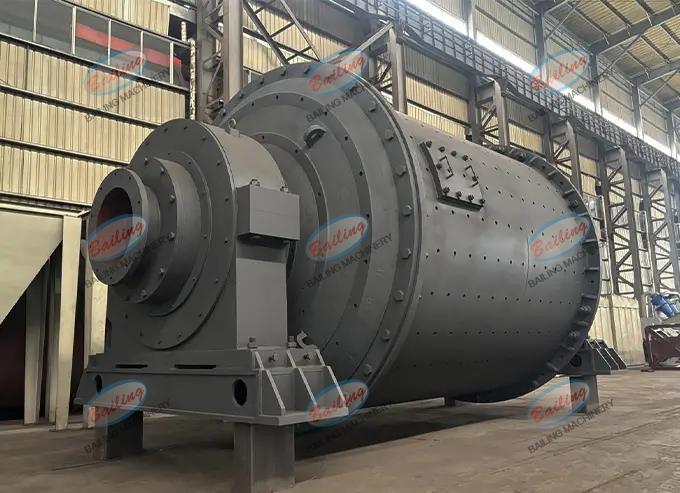
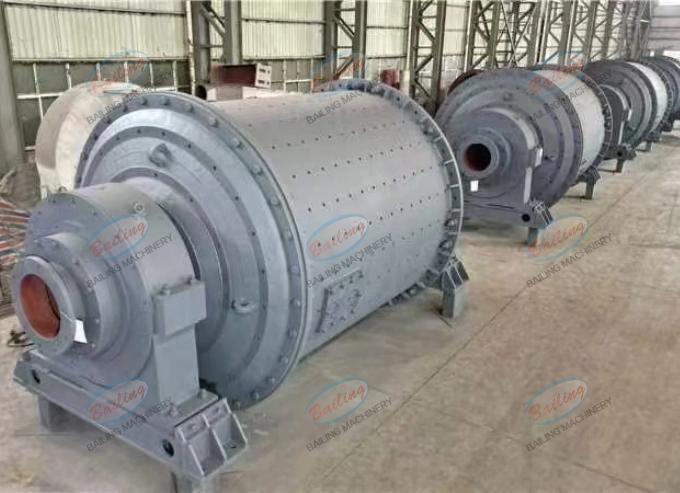
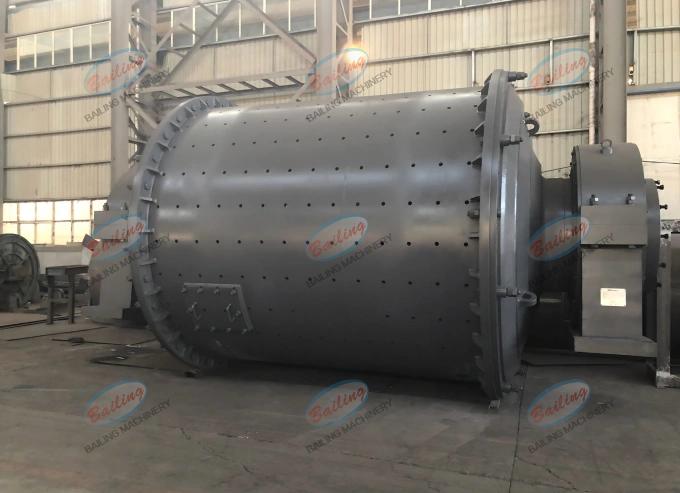
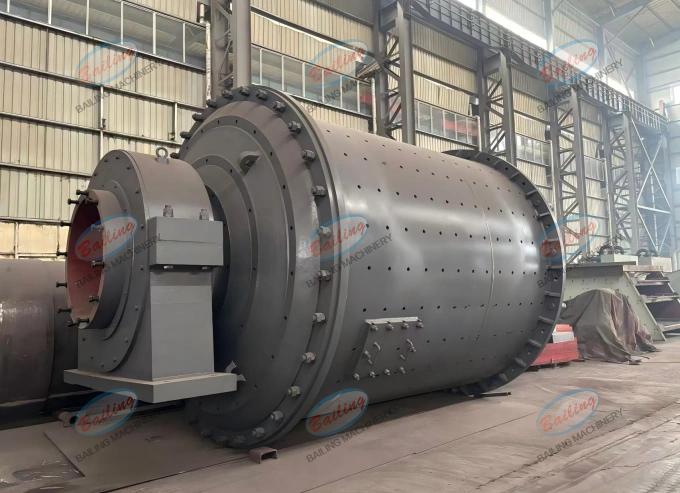
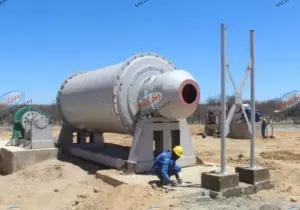
Ball mill is a key equipment for further grinding of materials after they have been crushed. The Bailing energy-saving ball mill adopts double-row self-aligning bearings, reducing energy consumption by 30% and increasing the material processing capacity by 15% to 20%. The main bearing is lubricated with grease, which is convenient and clean, eliminating heavy metal pollution.
Advantages
Structure Drawing
Parameter
| Model | Rotational speed(r/min) | Balls weight(t) | Feeding size(mm) | Output size(mm) | Capacity(t/h) | Motor power(kw) | Weight(t) |
| Ф900×1800 | 42 | 1.4 | ≤20 | 0.075-0.89 | 0.65-2 | 18.5 | 3.6 |
| Ф900×2100 | 41 | 1.7 | ≤15 | 0.075-0.83 | 0.7-3.5 | 15 | 3.9 |
| Ф900×3000 | 41 | 2.7 | ≤20 | 0.075-0.89 | 1.1-3.5 | 22 | 4.5 |
| Ф1200×2400 | 36 | 3.5 | ≤25 | 0.075-0.6 | 1.5-4.7 | 30 | 11.5 |
| Ф1200×2800 | 31 | 6.8 | ≤25 | 0.075-0.6 | 1.5-5 | 37 | 13 |
| Ф1200×4500 | 32 | 5.5 | ≤25 | 0.074-0.4 | 1.6-5.8 | 55 | 13.8 |
| Ф1500×3000 | 31 | 6.8 | ≤25 | 0.074-0.4 | 2-7 | 75 | 17 |
| Ф1500×4500 | 27 | 10.5 | ≤25 | 0.074-0.4 | 3.5-8 | 110 | 21 |
| Ф1500×5700 | 27 | 15 | ≤25 | 0.074-0.4 | 3.5-10 | 130 | 24.7 |
| Ф1830×3000 | 26 | 13 | ≤25 | 0.074-0.4 | 4-12 | 160 | 28 |
| Ф1830×3600 | 26 | 15 | ≤25 | 0.075-0.4 | 5-13 | 160 | 33.5 |
| Ф1830×4500 | 26.5 | 17 | ≤25 | 0.075-0.6 | 5.5-20 | 185 | 35 |
| Ф1830×7000 | 26 | 25 | ≤25 | 0.074-0.4 | 6.5-22 | 210 | 36 |
| Ф2100×3600 | 24 | 21 | ≤25 | 0.074-0.4 | 6.5-22 | 185 | 46.8 |
| Ф2200×5500 | 21 | 30 | ≤25 | 0.074-0.4 | 10-20 | 245 | 48.5 |
| Ф2200×6500 | 21.7 | 35 | ≤25 | 0.074-0.4 | 14-26 | 380 | 52.8 |
| Ф2200×7500 | 21 | 33 | ≤25 | 0.074-0.4 | 16-30 | 380 | 56 |
| Ф2400×3000 | 20.6 | 30 | ≤25 | 0.075-0.4 | 15-50 | 245 | 59 |
| Ф2400×4500 | 21 | 33 | ≤25 | 0.074-0.4 | 15-60 | 380 | 65 |
| Ф2700×3600 | 20.6 | 39 | ≤25 | 0.074-0.4 | 20-70 | 400 | 91.3 |
| Ф2700×4000 | 20.7 | 40 | ≤25 | 0.074-0.4 | 20-80 | 400 | 94 |
| Ф2700×4500 | 20.7 | 48 | ≤25 | 0.074-0.4 | 20-90 | 430 | 102 |
| Ф3200×4500 | 18 | 65 | ≤25 | 0.075-0.4 | according to the process conditions | 800 | 137 |
| Ф3600×4500 | 15.8 | 90 | ≤25 | 0.074-0.4 | 24.3-136 | 850 | 160 |
| Ф3600×6000 | 15.8 | 110 | ≤25 | 0.074-0.4 | 32.4-181 | 1250 | 186 |
| Ф3600×8500 | 18 | 131 | ≤25 | 0.074-0.4 | 45.8-256 | 1800 | 252 |
| Ф4000×5000 | 16.9 | 121 | ≤25 | 0.074-0.4 | 45-208 | 1500 | 203 |
| Ф4000×6000 | 16.9 | 146 | ≤25 | 0.074-0.4 | 65-248 | 1600 | 218 |
| Ф4000×6700 | 16.9 | 149 | ≤25 | 0.074-0.4 | 45-252 | 1800 | 238 |
| Ф4500×6400 | 15.6 | 172 | ≤25 | 0.074-0.4 | 54-306 | 2000 | 280 |
| Ф5030×6400 | 14.4 | 216 | ≤25 | 0.074-0.4 | 68-386 | 2500 | 320 |
Note: The production capacity varies for different materials. For detailed information, please call for consultation.
3D Video
Applied Material :
Gypsum grinding, limestone powder, iron powder, ore processing, quartz sand and various other ores.
Application of Wet Ball Mill
Ore Grinding
One of the primary applications of wet ball mill is in ore grinding. It is used to break down large materials into smaller particles, creating a suitable size for further processing. Wet ball mill is particularly effective in grinding materials with high hardness or those containing abrasive substances. This process helps to extract valuable minerals from ores and increase overall efficiency of mineral processing operations.
Ceramic Industry
In the ceramic industry, wet ball mill plays a crucial role in the production of high-quality ceramics. It is used to mix and grind raw materials, such as clays, feldspar, and glaze, to obtain a uniform mixture. The wet grinding process ensures better dispersion of ingredients and improves the overall quality and properties of ceramic products.
Paint and Coatings Industry
Wet ball mill is widely employed in the paint and coatings industry to achieve desired particle size distribution and improve the flow characteristics of paint formulations. The grinding process helps to break down agglomerates and disperse pigments evenly, resulting in a smooth and consistent coating. Wet ball mill is also used to blend and homogenize different ingredients in paint manufacturing.
Chemical Industry
Wet ball mill is utilized in the chemical industry for various purposes, including the production of fine powders, dispersion of pigments and dyes, and wet grinding of chemicals. It is particularly suitable for grinding heat-sensitive materials or those that tend to react with oxygen or moisture. The controlled milling environment helps to prevent unwanted reactions and ensures a higher degree of product purity.
Construction Materials
Wet ball mill is used in the construction materials industry to grind and mix cement, lime, and other binders. It helps to reduce the clinker particles and improve the overall quality of cement. The wet grinding process ensures better hydration and setting of the cement, leading to higher strength and durability of concrete structures.
Environmental Remediation
Wet ball mill is also employed for environmental remediation purposes. It is used to grind and treat contaminated soil or sediments to remove pollutants. The wet grinding process helps in breaking down pollutants and facilitates their removal during subsequent treatment stages. This application of wet ball mill contributes to the restoration and preservation of the environment.
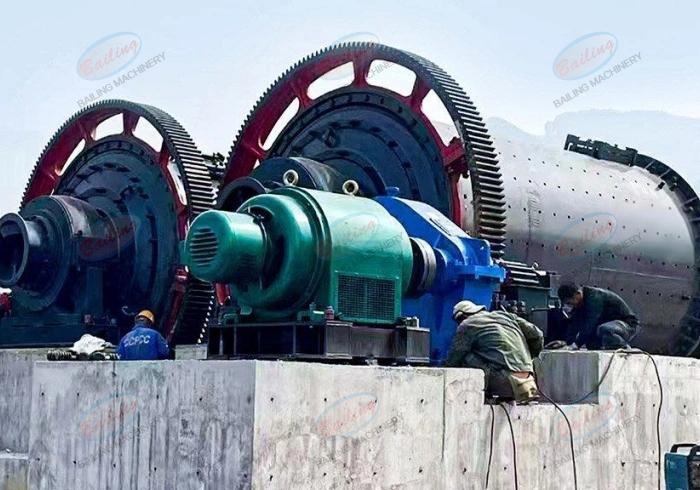
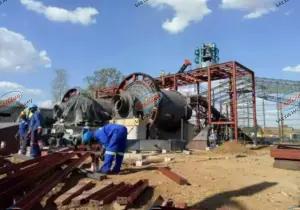
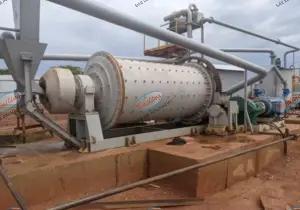
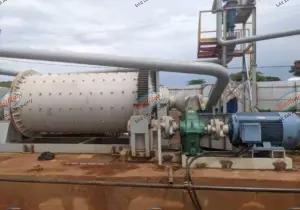
Components of Ball Mill
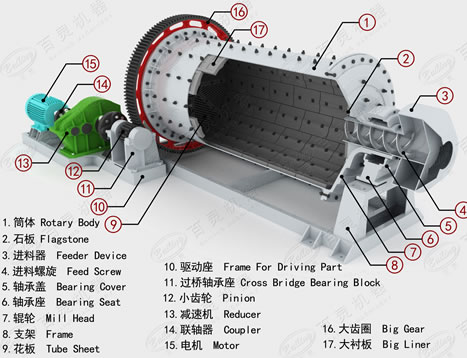
- Feeding device: This component is responsible for continuously feeding the materials into the ball mill. It ensures a steady and uniform supply of materials, allowing the mill to operate efficiently.
- Shell: The shell of the ball mill is a hollow cylindrical container made up of steel. It serves as a protective casing for the mill and contains the materials being ground.
- Liner: The liner is an important component that lines the inside of the shell. It is designed to protect the shell from wear and tear caused by the grinding media and the materials being ground. The liner also helps to enhance the grinding process.
- Grinding media: These are the balls or rods used in the ball mill to grind the materials. The grinding media come in various sizes and materials, such as steel, ceramic, or rubber. They are responsible for reducing the size of the materials by applying force through impact and abrasion.
- Drive system: The drive system consists of an electric motor, gearbox, and couplings. It is responsible for providing the necessary power to rotate the shell and the grinding media, enabling the mill to operate.
- Discharge device: This component is responsible for removing the milled materials from the wet ball mill. It ensures a controlled and efficient discharge of the ground materials.
- Support structure: The support structure provides stability and support to the ball mill. It is designed to withstand the weight and vibrations produced during operation.
What is the difference between a wet and dry ball mill?
- Grinding medium: The grinding media in a wet ball mill is usually a steel ball, whereas in a dry ball mill, the grinding media can be steel ball or ceramic balls.
- Wet grinding: In a wet ball mill, the materials are immersed in a liquid medium, giving them the ability to be ground and dispersed evenly. This results in a more uniform product size. On the other hand, in a dry ball mill, the materials are not immersed in a liquid medium, and therefore the grinding action is limited, resulting in a coarser product size.
- Drying capability: Wet ball mills require a lot of liquid to be added to the material being ground, which can lead to slower production times. In contrast, dry ball mills do not require the addition of a liquid, and therefore they can be more efficient and have faster production times.
- Energy consumption: Wet ball mills generally require higher energy consumption compared to dry ball mills. This is because the wet grinding process requires a larger amount of energy to effectively grind the material and overcome the friction between the solid particles and the liquid medium.
- Particle size distribution: Wet ball mills are more suitable for continuous grinding and have a narrower particle size distribution because the liquid medium helps to disperse the particles and prevent agglomeration. Dry ball mills, on the other hand, have a wider particle size distribution and are more suitable for batch or intermittent grinding.
- Environmental impact: Wet ball mills generate a larger amount of waste liquid, which needs to be treated before disposal. Dry ball mills, on the other hand, do not produce any liquid waste, making them more environmentally friendly.
How does a wet ball mill work?
Point 1
The material to be ground is fed into the mill in a wet or dry state. In the case of wet grinding, the material is mixed with water or other liquid additives to form slurry.
Point 2
The slurry is then fed into a rotating cylindrical shell. The shell is usually lined with rubber or special lining materials to protect it from wear.
Point 3
As the shell rotates, the balls inside it are lifted by the centrifugal force and then drop onto the material to be ground. The grinding balls, made of steel or other materials, crush and grind the material into fine powder or small particles.
Point 4
The grinding action continues as the balls roll and cascade within the mill. This process helps to further reduce the size of the material.
Point 5
The ground material is discharged from the mill through a discharge grate at the bottom. The size of the particles can be controlled by adjusting the size of the openings in the grate.
Point 6
To prevent the grinding balls from falling out of the shell, a retaining ring or a retaining screen is often used at the discharge end.
Point 7
During the grinding process, the slurry inside the mill is continuously circulated to ensure uniform grinding and to prevent the formation of excessive heat.
Point 8
Depending on the desired end product, the slurry may need to be further processed or dewatered after leaving the mill.
How to maintain ball mill
- Clean Regularly: Regular cleaning is crucial for the proper functioning of a ball mill. Start by removing any debris or material buildup from the mill’s interior and exterior. Use a brush, compressed air, or vacuum cleaner to get rid of dust, dirt, and other contaminants.
- Lubrication: Proper lubrication is vital to reduce friction and wear between the moving parts of the ball mill. Regularly check the lubrication system and ensure that it is properly filled with the recommended lubricant. Follow the manufacturer’s guidelines for lubrication type and frequency.
- Inspect the Liners: The liners of a ball mill protect the mill shell from direct impact and wear. Regularly inspect the liners for signs of wear, cracks, or any other damage. Replace the liners when necessary to maintain the mill’s efficiency and minimize potential downtime.
- Monitor Ball Charge: The ball charge refers to the grinding media inside the ball mill. Regularly monitor the ball charge and ensure that it is within the recommended range. An insufficient or excessive ball charge can significantly impact the mill’s performance.
- Check the Drive System: The drive system of a wet ball mill is responsible for rotating the mill’s drum. Regularly inspect the drive system, including the motor, belt, gearbox, and couplings, for any signs of wear or damage. Any abnormalities should be promptly addressed to prevent further issues.
- Maintain Proper Operation Parameters: Follow the recommended operating parameters for the ball mill, such as the rotational speed, feed rate, and retention time. Operating outside of these parameters can result in reduced efficiency and increased wear and tear on the mill.
- Regular Maintenance: Schedule regular maintenance procedures for the ball mill. This may include checking the bolts and fasteners, tightening loose connections, and inspecting electrical components. Regular maintenance helps identify and address any potential issues before they escalate.
- Train Operators: Proper operation and maintenance of a ball mill rely on knowledgeable operators. Ensure that the operators are trained on the correct procedures, safety measures, and troubleshooting techniques. Regularly update their knowledge and provide refresher training when necessary.
- Keep Records: Maintain a record of maintenance activities, including inspections, repairs, and replacements. This record will help track the history of the wet ball mill and identify any recurring issues or patterns that need addressing.
- Seek Professional Assistance: If you encounter any complex issues or require specialized maintenance, don’t hesitate to seek professional assistance. Professional technicians can provide expert advice, perform in-depth inspections, and offer solutions tailored to your ball mill’s requirements.