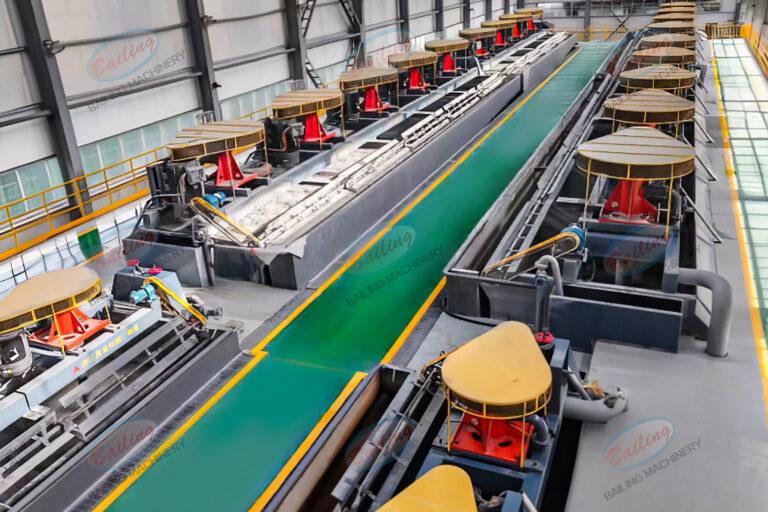
Scheelite Beneficiation Process Flow
A commonly used method involves concentrating the pulp and applying high temperatures. The pulp is first concentrated to a density of 60–70%, after which sodium silicate is added. The pulp is then heated to 80°C and agitated for 30–60 minutes. Finally, the pulp is diluted with fresh water, and the scheelite is floated at room temperature; the material remaining in the flotation cell consists of fluorite and calcite.
Since sodium silicate exerts similar depressive effects on both scheelite and barite, separation cannot be effectively achieved using sodium silicate alone. Instead, alkyl sulfates are employed as collectors to repeatedly float the barite under acidic conditions (pH 1.5–3.0), leaving the scheelite behind in the flotation cell.
Prior to floating the scheelite, xanthates are used to float and remove the sulfide minerals. During the subsequent scheelite flotation stage, small amounts of oxides and sodium sulfide are added to depress any residual sulfides that were not removed in the previous step.
By utilizing oleic acid as a collector and sodium silicate as a depressant, the quartz and silicate gangue minerals can be effectively depressed, allowing the scheelite to be floated and recovered.
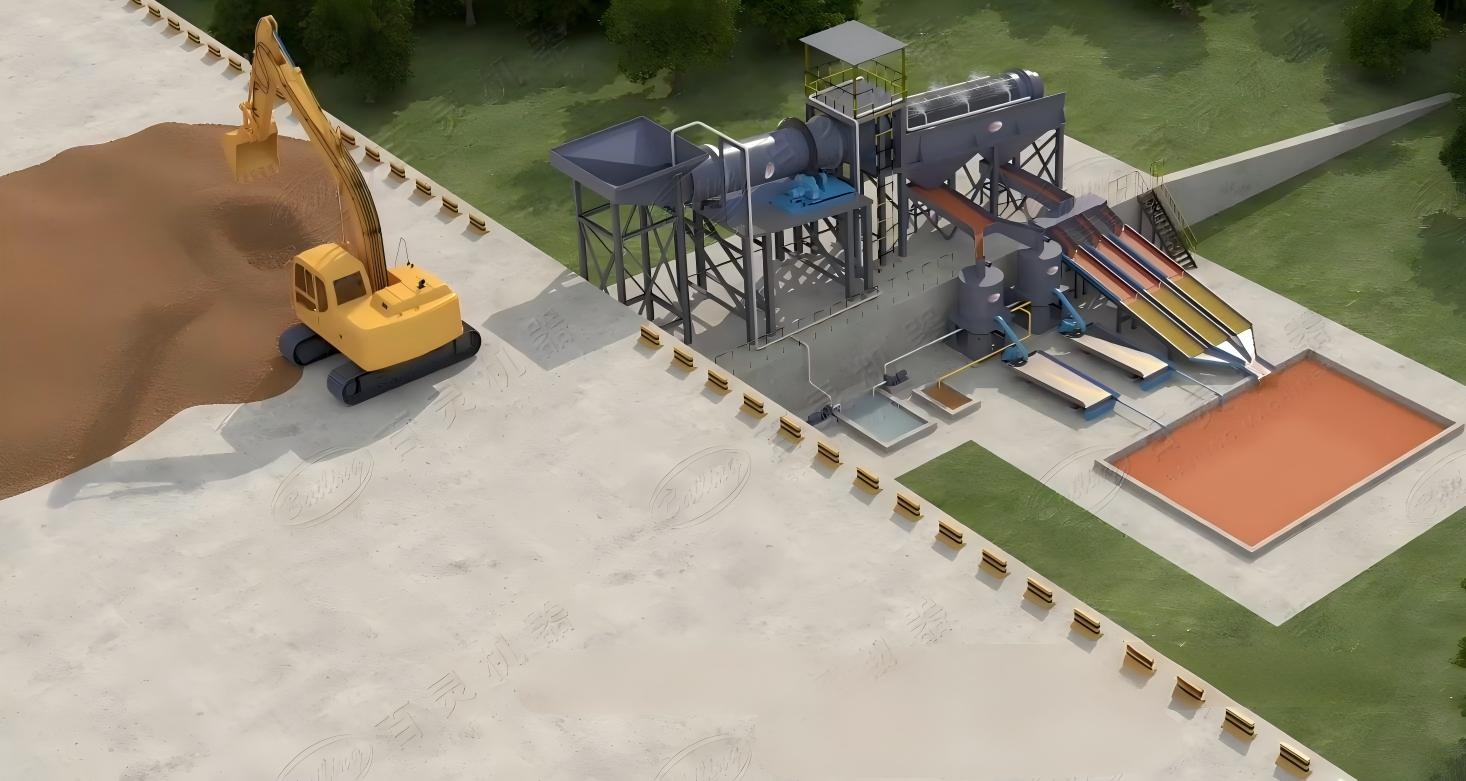
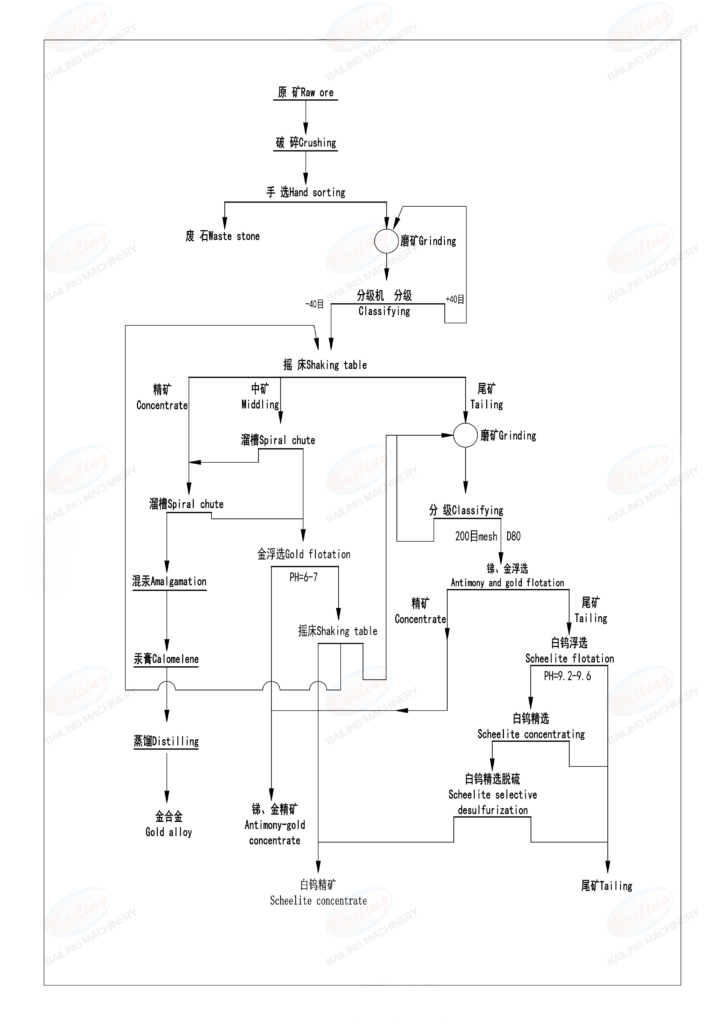
Scheelite Beneficiation Process Flow Diagram
Related Case Study
A low-grade skarn-type scheelite deposit in Hunan Province (with a raw ore WO₃ grade of 0.25%) was processed by Henan Bailing Machinery using the “Lime-Sodium Silicate Method”—a process designed to depress silicates while floating scheelite. Through staged grinding (achieving a fineness of 78% at -0.074 mm) followed by rough beneficiation at ambient temperature (conducted at pH 10–11, utilizing 800 g/t of water glass and 100 g/t of lead nitrate as activators, along with 300 g/t of oleic acid-based collectors), a rough concentrate with a WO₃ grade of 1.8% was obtained. Subsequently, the rough concentrate underwent heating (to 90°C) and agitated pulping, followed by the addition of a substantial amount of water glass (2000 g/t) to intensify silicate depression. After three stages of cleaning, a final tungsten concentrate was produced (WO₃ grade: 65.2%; recovery rate: 82.3%), while the WO₃ grade in the tailings was reduced to 0.03%. This process effectively resolved the challenging problem of separating scheelite from calcium-bearing gangue minerals (such as calcite and fluorite).