Phosphate Ore Beneficiation Flowcharts
Due to the complex structure and diverse properties of phosphate ores, flotation has become the most widely adopted beneficiation process.
Direct flotation involves using effective depressants to suppress gangue minerals while employing collectors to concentrate the phosphate minerals within the froth phase. This method is suitable for low-grade phosphate ores, including both magmatic apatite deposits and sedimentary-metamorphic apatite ores.
This process is primarily used to separate phosphate minerals from dolomite. In a weakly alkaline medium, fatty acid collectors are used to float the dolomite, thereby concentrating the phosphate minerals in the flotation cell underflow. A key advantage of this method is that it can be conducted at ambient temperatures, and the relatively coarse particle size of the underflow product facilitates subsequent downstream processing.
Double reverse flotation is conducted under alkaline conditions, where the surfaces of silicate minerals are induced to carry a positive charge, allowing for the separation of target minerals using anionic collectors. Specifically, the process involves an initial flotation step to remove dolomite, followed by a reverse flotation step to remove silicates; the final product remaining in the flotation cell underflow constitutes the heavy concentrate. This production line can be operated at ambient temperatures and is applicable to relatively coarse-grained ores.
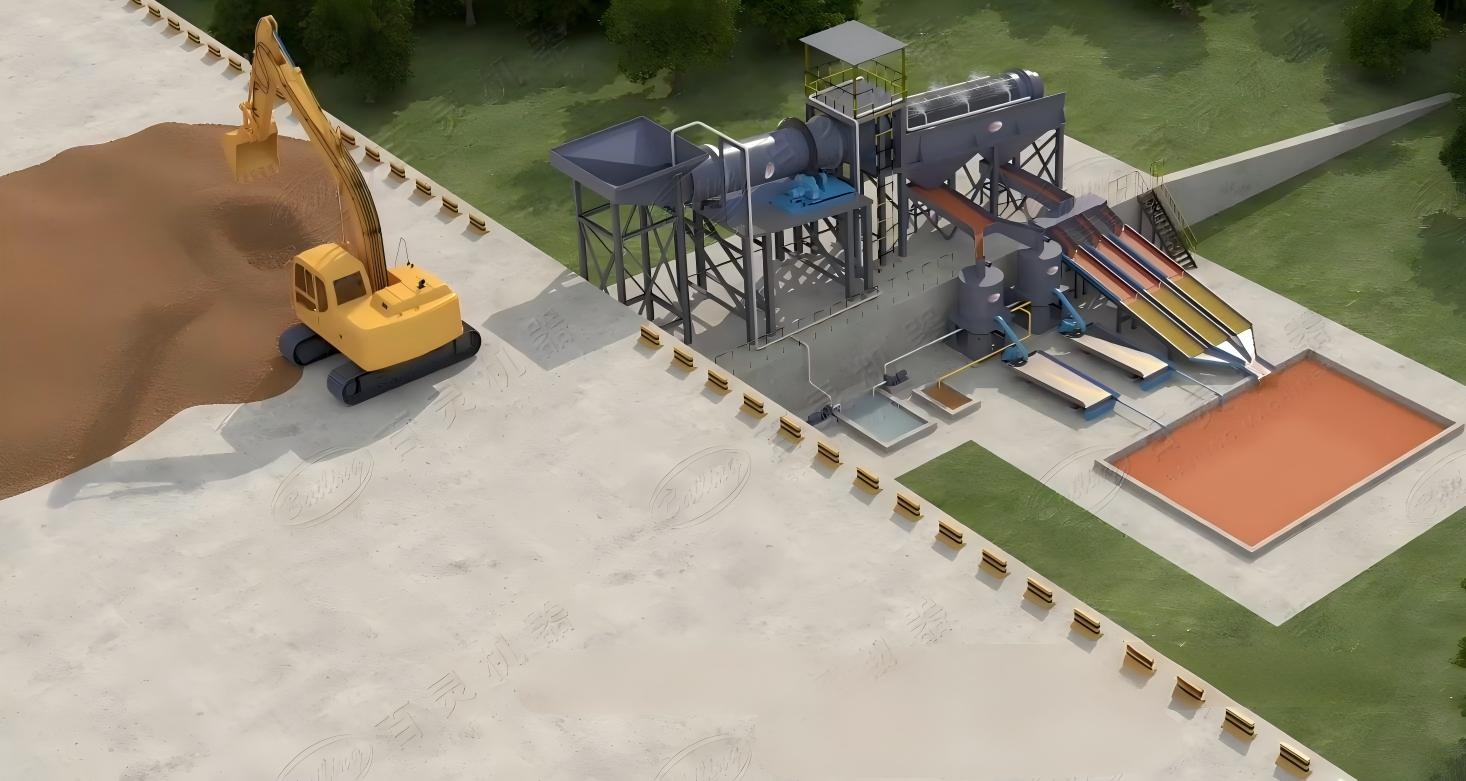
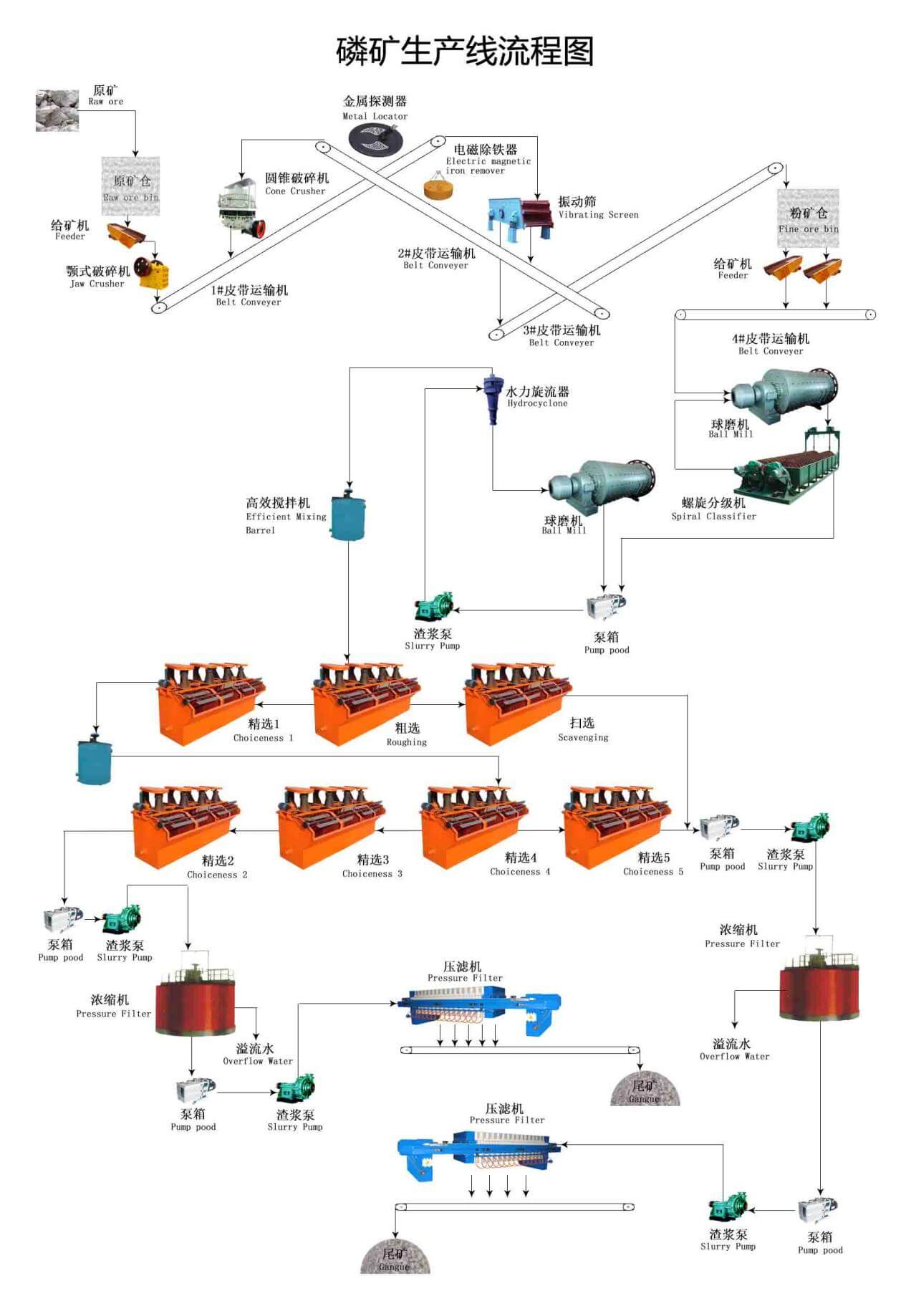
Phosphate Ore Beneficiation Process Flowchart
Related Case Study
Addressing the specific characteristics of a phosphate mine in Yunnan—namely, low raw ore grade and fine dissemination grain size—Henan Bailing Machinery implemented a “stage grinding–stage beneficiation” process. Following coarse crushing, the raw ore undergoes preliminary grinding in a rod mill; after classification via a spiral classifier, it enters the flotation system. The process employs a “one roughing, one cleaning, and two scavenging” circuit, utilizing fatty acids as collectors and water glass as a depressant. This process successfully elevated the grade of the phosphate concentrate from 22% to over 30%, achieved a recovery rate of 85%, and reduced the P₂O₅ content in the tailings to below 3%, thereby realizing the efficient utilization of mineral resources.