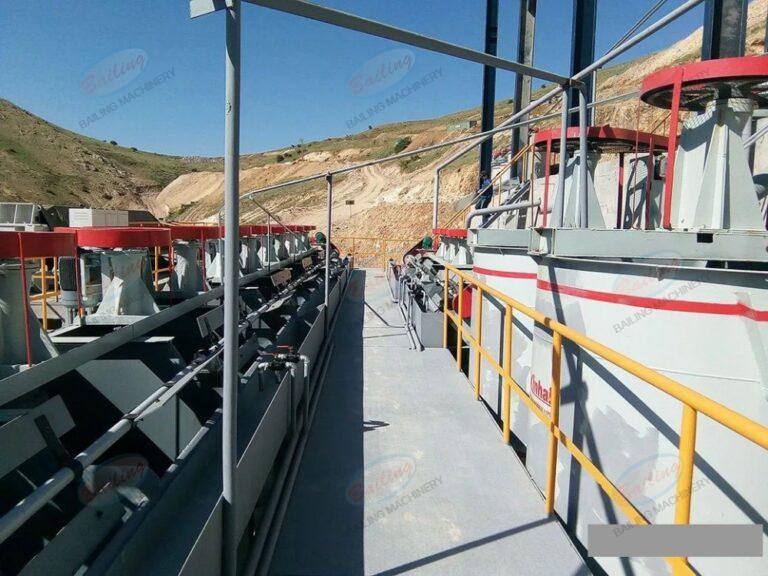
Nickel Ore Beneficiation Process
Used for beneficiating ores in which the copper content is lower than the nickel content. The resulting mixed copper-nickel concentrate is directly smelted to produce high-grade nickel matte.
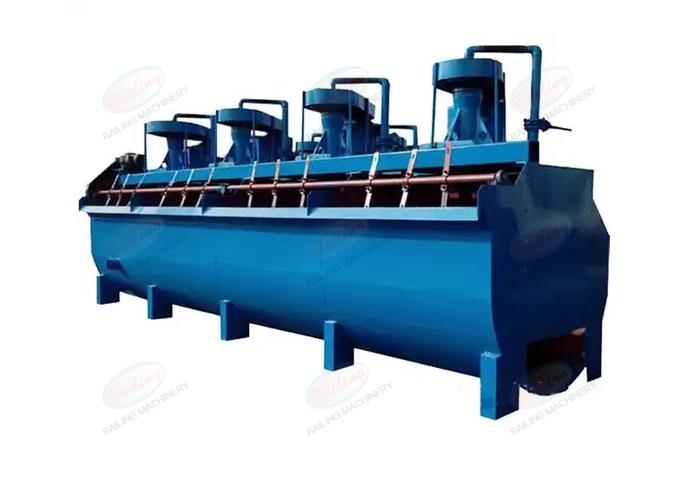
Copper and nickel are first recovered from the ore via mixed flotation; subsequently, a low-nickel copper concentrate and a copper-bearing nickel concentrate are separated from the mixed concentrate. The nickel concentrate is then smelted to produce high-grade nickel matte, which undergoes further flotation separation.
When the floatability of the various nickel minerals within the ore varies significantly, a mixed copper-nickel flotation is performed, followed by further recovery—from the resulting tailings—of those nickel-bearing minerals exhibiting poor floatability.
When beneficiating copper-nickel sulfide ores via flotation, collectors and frothers typically used for copper sulfide minerals are employed. A fundamental principle in determining the flotation flowsheet is to prioritize allowing copper to enter the nickel concentrate, while striving to prevent nickel from entering the copper concentrate. This is because nickel contained in copper concentrates suffers significant losses during the smelting process, whereas copper contained in nickel concentrates can be recovered relatively completely. In cases where the copper content in the ore is significantly higher than the nickel content, the copper may be separated into a distinct, standalone concentrate. The advantage of this flowsheet is that it directly yields a copper concentrate with a low nickel content. IV. Nickel Ore Beneficiation Process Flowchart.
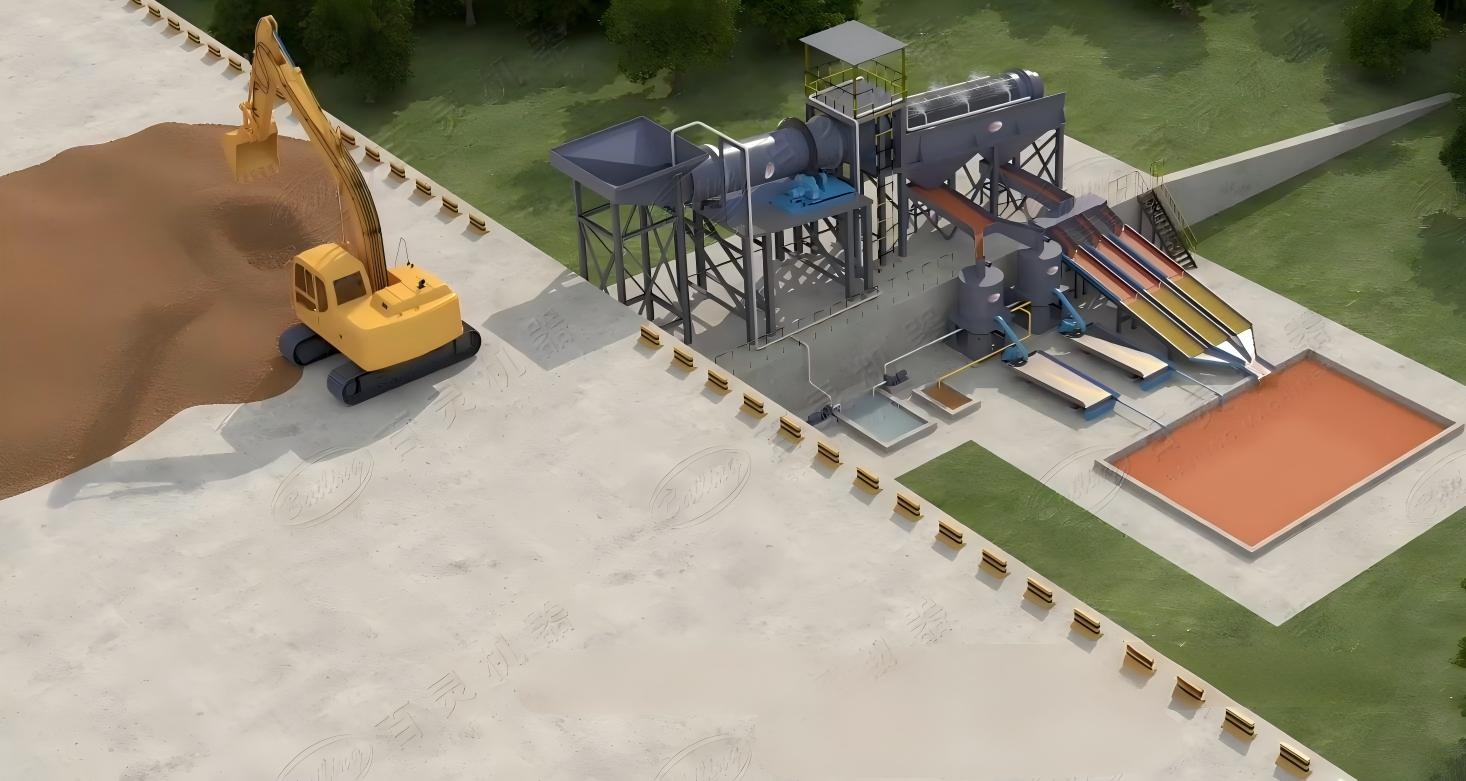
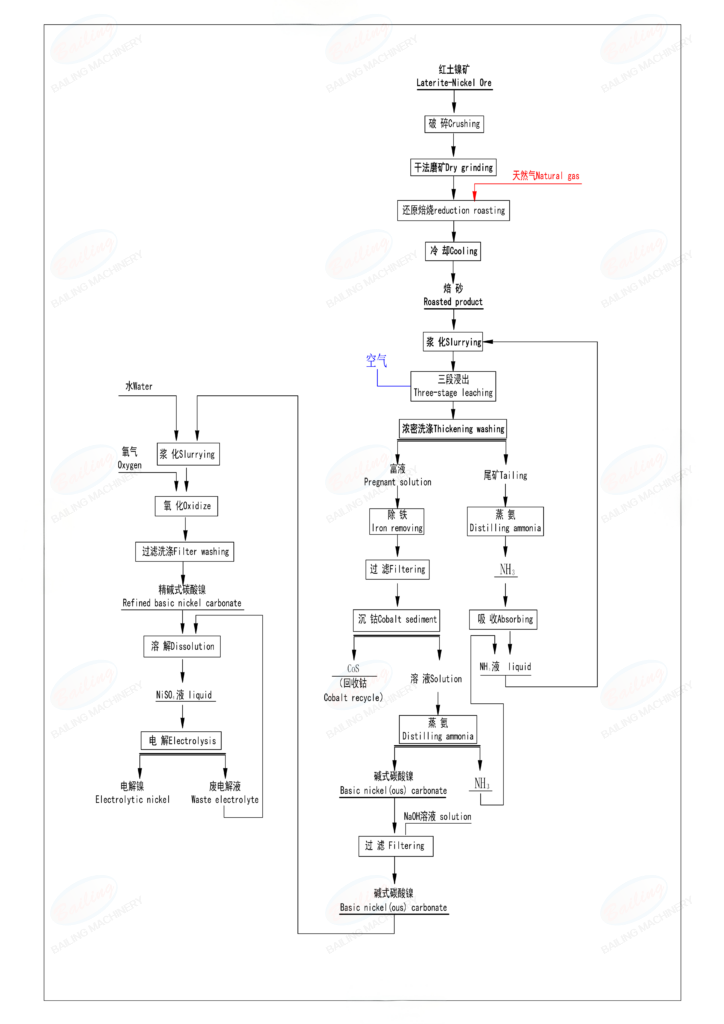
Nickel Ore Beneficiation Process Flowchart
Related Case Study
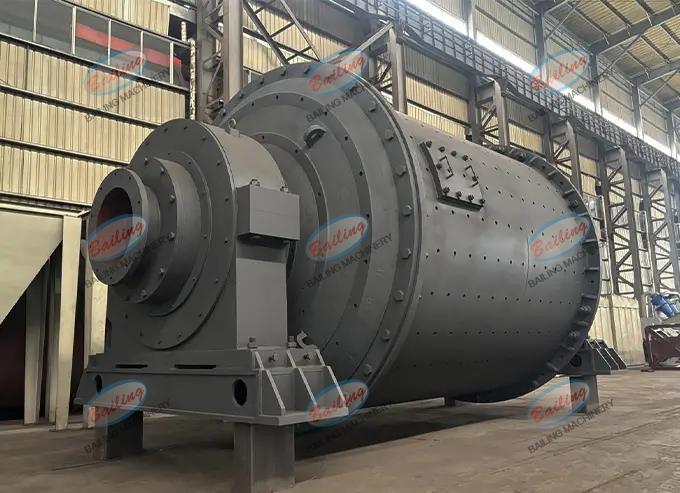
A copper-nickel mine in Gansu Province is a large-scale polymetallic sulfide deposit. Henan Bailing Machinery implemented a process flow featuring three-stage, closed-circuit crushing; staged grinding; combined copper-nickel flotation followed by separation; three-stage dewatering for the nickel concentrate; and two-stage dewatering for the copper concentrate. The process flow for this nickel beneficiation line is relatively simple; it utilizes extended flotation times, minimizes the number of cleaning stages, and employs distributed cleaning with multiple concentrate discharge points. This design ensures the earliest possible recovery of nickel minerals, resulting in a nickel concentrate grade reaching as high as 12%. The solution successfully met the client’s beneficiation requirements and generated significant economic benefits.