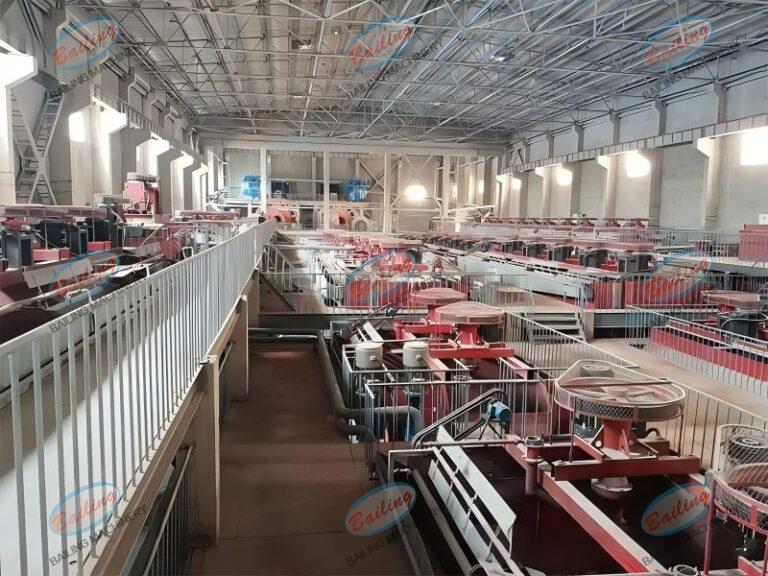
Molybdenum Ore Beneficiation Process
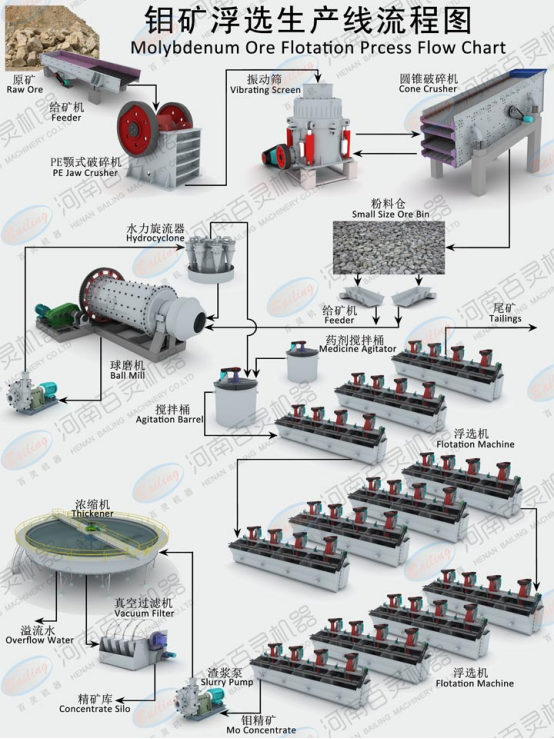
The molybdenum ore beneficiation flowsheet typically comprises several key stages: crushing, grinding, classification, flotation, and concentrate processing.
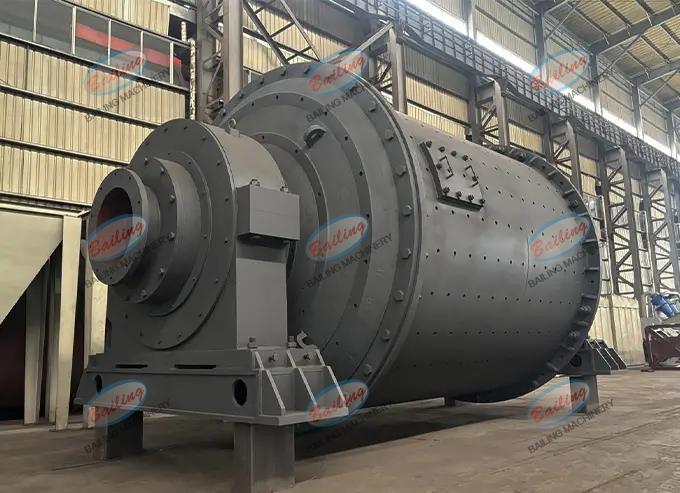
After undergoing crushing and grinding, the run-of-mine ore reaches a state of sufficient liberation, allowing for the complete separation of molybdenite from gangue minerals.
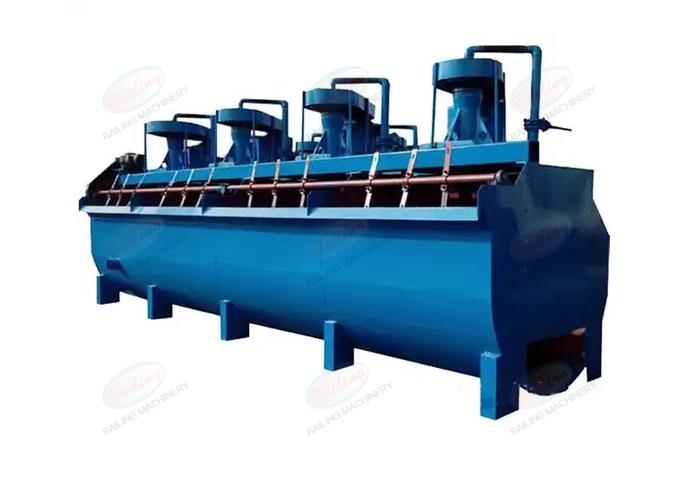
The resulting pulp is conditioned with chemical reagents before entering the flotation system, where a standard sequence of roughing, scavenging, and cleaning stages is employed to recover the molybdenite.
The floated molybdenum concentrate undergoes thickening and dewatering to become the final product, while the flotation tailings are directed to the tailings treatment system.
For ores containing associated copper and molybdenum, a combined flowsheet may be adopted—either by floating the copper first followed by the molybdenum, or by performing a bulk flotation of both copper and molybdenum, followed by their subsequent separation.
Common Flowsheets and Their Characteristics:
1. Stage Grinding and Stage Beneficiation:
A bulk roughing flotation is performed on the coarsely ground ore. The resulting rough concentrate is then subjected to regrinding to ensure the complete liberation of molybdenum minerals from copper minerals. Regrinding only the rough concentrate—rather than the entire ore stream—reduces the volume of material requiring fine grinding, thereby conserving energy.
2. Intensified Flotation Process for Upgrading Molybdenum Concentrate:
During the roughing stage, a strict reagent regime is implemented to precisely control chemical dosages, adhering to the principle of “recovering as early as possible” to minimize unnecessary recycling and avoidable losses. Furthermore, the process fully leverages the secondary enrichment effect inherent in the flotation froth; by introducing appropriate wash water additions, impurities within the froth are rinsed away, thereby achieving the objective of intensified flotation and concentrate upgrading. IV. Molybdenum Ore Beneficiation Process Flowchart
Molybdenum Ore Beneficiation Flowsheet
Related Case Study
Flotation Purification of a Low-Grade Porphyry Molybdenum Ore in Luoyang, Henan
I. Ore Characteristics
The raw ore grade of a specific porphyry molybdenum deposit in Luoyang, Henan, is merely 0.06%. The primary molybdenum-bearing mineral is molybdenite (MoS₂), which occurs as fine-grained disseminations distributed within quartz veins and pyrite fissures. The gangue minerals consist mainly of quartz and feldspar, with minor amounts of pyrite, pyrrhotite, and carbonates. The ore exhibits a high clay content (clay minerals account for approximately 8%), resulting in significant variations in natural floatability and presenting a high degree of difficulty for flotation separation.
II. Process Flow Design
Tailored to the specific characteristics of the ore, Henan Bailing Machinery adopted a flotation process featuring “stage grinding—rough concentrate regrinding—multi-stage cleaning.” The specific process flow is outlined below:
1. Stage I Grinding and Rough Flotation
• The raw ore undergoes two-stage closed-circuit grinding until 75% of the material passes through a 0.074 mm sieve . Lime is added (to achieve a pH of 9.5) to depress pyrite. Kerosene (120 g/t) is employed as a collector and No. 2 Oil (30 g/t) as a frother to conduct rough flotation, yielding a rough concentrate (Mo grade: 0.32%) and tailings (Mo grade: 0.02%).
2. Rough Concentrate Regrinding and Cleaning
• The rough concentrate is reground until 85% of the material passes through a 0.045 mm sieve . The grade is subsequently upgraded through three stages of cleaning (with middlings returned sequentially). During the cleaning stage, a small amount of water glass (100 g/t) is added to disperse slime and minimize mechanical entrainment. The final product is a molybdenum concentrate (Mo grade: 48.5%, Recovery: 86.3%).
3. Scavenging of Tailings and Middlings Treatment
• The rough flotation tailings undergo two stages of scavenging. The scavenger concentrate is returned to the rough flotation circuit, while the scavenger tailings are discarded. The middlings are thickened and then returned to the regrinding circuit to prevent the loss of valuable metals. III. Optimization of Key Technologies
1. Inhibitor Selection
• To address the presence of pyrite, a combined inhibitor consisting of lime and sodium cyanide was adopted (800 g/t lime + 20 g/t sodium cyanide). This effectively suppresses iron sulfide minerals and minimizes interference with molybdenum recovery.
2. Collector Improvement
• As traditional kerosene exhibited low collection efficiency, a switch was made to a composite collector (kerosene:diesel = 3:1). This enhanced the selectivity for molybdenite, and the specific consumption rate was reduced to 90 g/t.
3. Slime Dispersion
• The addition of sodium hexametaphosphate (50 g/t) in synergy with water glass served to disperse clay minerals. This prevented the clay from coating the surfaces of the molybdenum minerals, thereby significantly accelerating the flotation rate.
IV. Process Performance Indicators
• Raw Ore Processing Capacity: 2,000 t/d
• Concentrate Specifications: Mo Grade 48.5%, Recovery Rate 86.3%, Sulfur Content <0.5%
• Reagent Costs: Reduced by 15% compared to traditional processes, attributed to the optimization of the composite collector and inhibitor combination.
V. Case Summary
This case study successfully achieved the efficient recovery of low-grade molybdenum ore by employing a “stage grinding—rough concentrate regrinding” flowsheet to address the issue of fine-grained mineral dissemination. This approach was combined with an optimized reagent regime (specifically, the inhibitor combination and composite collector) and slime dispersion techniques. The process is applicable to similar porphyry-type molybdenum deposits.