Process Flow
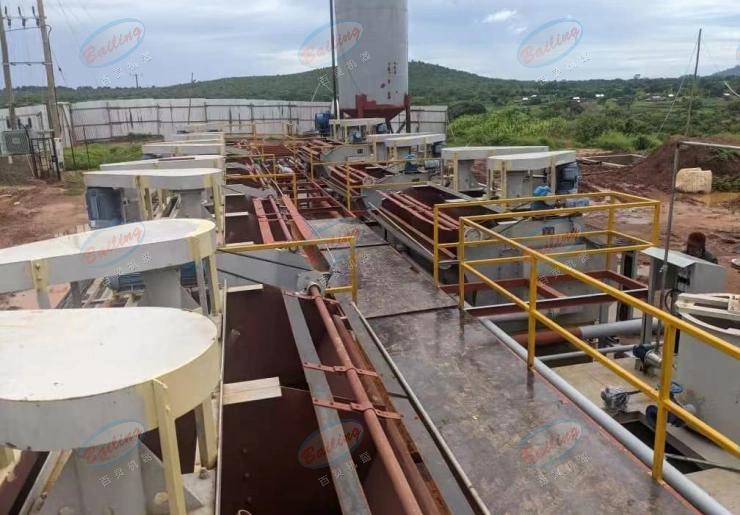
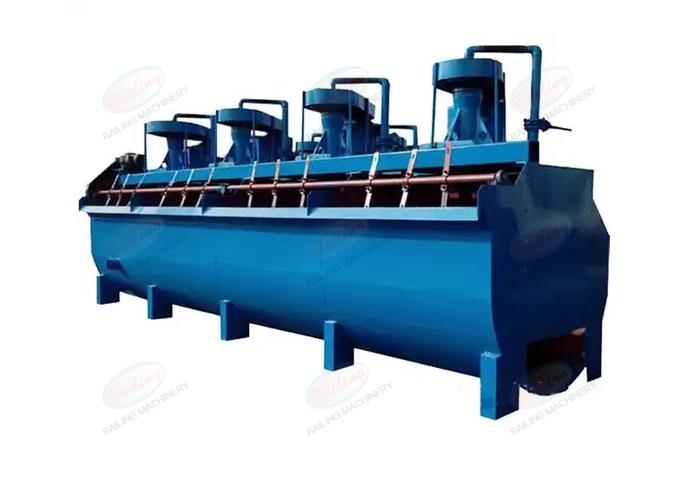
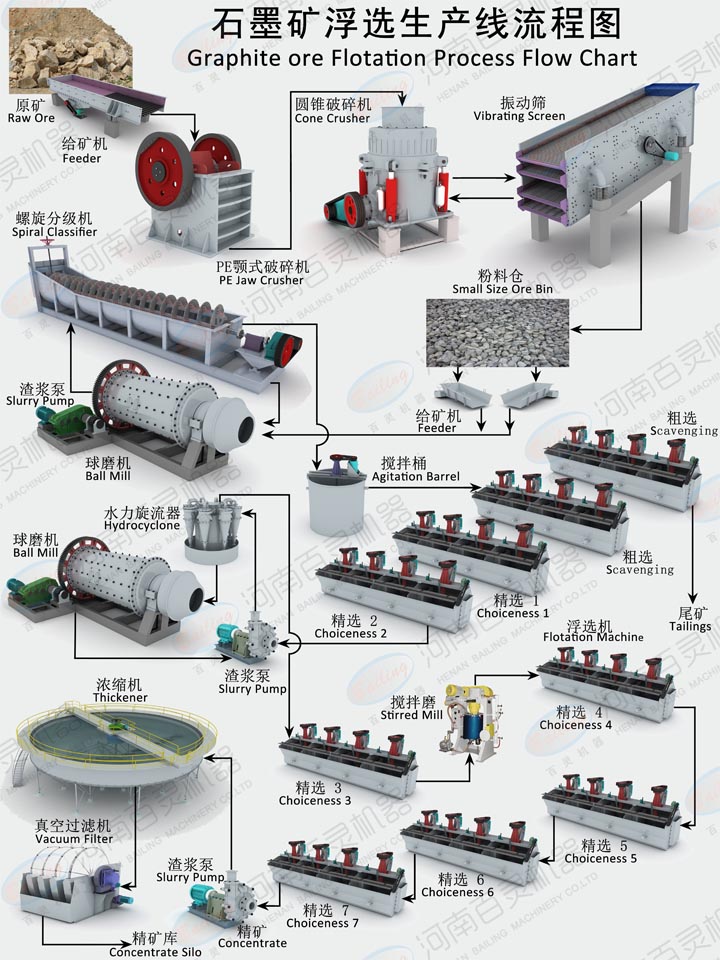
Crystalline graphite possesses excellent natural floatability; consequently, beneficiation is almost exclusively achieved through flotation methods. Since the size of the graphite flakes constitutes one of its most critical quality indicators, the separation strategy employs a process of multi-stage grinding and multi-stage flotation to facilitate the early recovery of large-flake graphite. The typical beneficiation flowsheet consists of one roughing stage, one scavenging stage, and seven to eleven cleaning stages, yielding a graphite concentrate with a fixed carbon content ranging from 90% to 97%.
Commonly used reagents in the flotation process include kerosene and diesel as collectors; “No. 2 Oil” and “No. 4 Oil” as frothers; lime and sodium carbonate as modifiers; and water glass (sodium silicate) as a depressant.
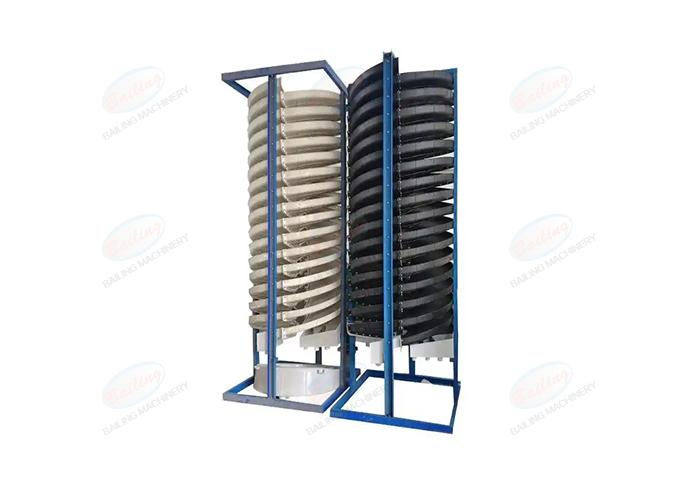
For graphite ores containing associated heavy minerals, a combined gravity separation and flotation flowsheet may be employed: gravity separation is utilized first to remove the heavy minerals, after which the gravity separation tailings (the lighter mineral fraction) are processed using flotation methods.
Cryptocrystalline graphite consists of extremely minute crystals—hence it is also referred to as microcrystalline graphite—and the graphite particles are frequently finely disseminated within a clay matrix, making their separation particularly challenging. Due to the high grade of the raw ore (typically containing 60%–80% carbon), many graphite mines directly crush and process the extracted ore to produce and sell graphite powder products.
A specific graphite mine in Hunan Province established a flotation plant in the 1950s to process cryptocrystalline graphite; however, operations were eventually suspended due to prohibitively high costs. Currently, various institutions continue to conduct research into novel flotation processes for cryptocrystalline graphite (such as oil agglomeration flotation).
Graphite Beneficiation Process Flowchart
Related Case Study
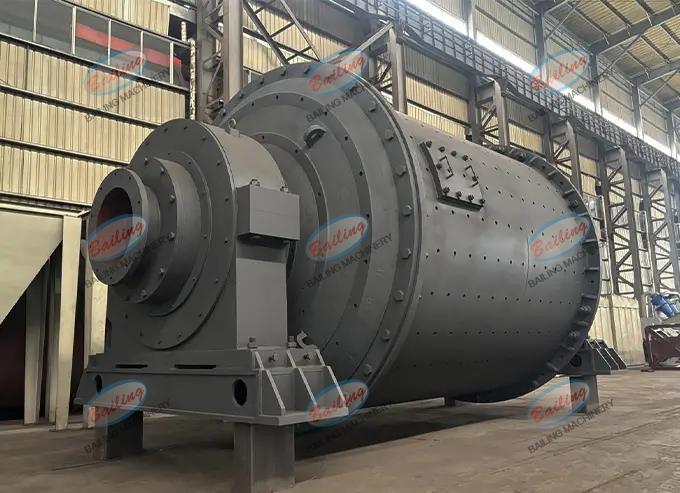
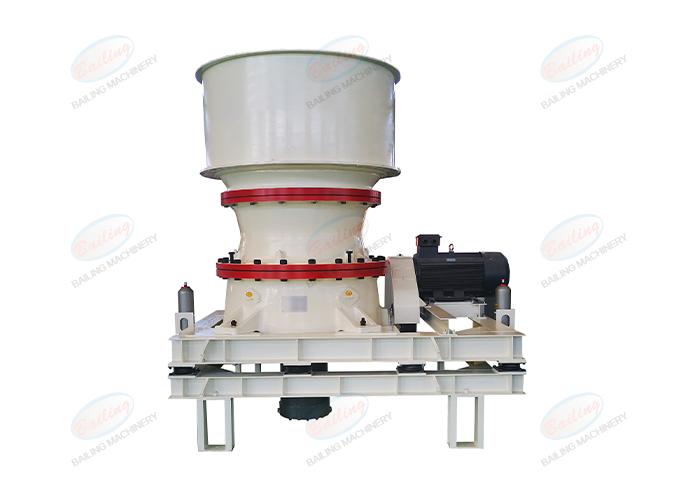
At a graphite mine in Heilongjiang Province, China—where the raw ore grade stands at 8.2%—a process utilizing “three-stage closed-circuit crushing followed by staged grinding and staged beneficiation” was implemented. Following coarse crushing, the material undergoes a closed-circuit cycle of intermediate and fine crushing and screening. Grinding is performed using ball mills in conjunction with classification operations. The flotation stage employs a circuit consisting of one roughing pass, three cleaning passes, and two scavenging passes. Ultimately, a concentrate with a grade of 92.5% and a recovery rate of 89.3% is obtained, while the tailings grade is reduced to 0.8%; this process achieves both the efficient preservation of graphite flakes and the comprehensive utilization of mineral resources.