Introduction to the Copper Sulfide Flotation Process
The copper sulfide flotation process is a core method in modern mineral processing technology, specifically designed for treating copper ores predominantly composed of sulfide minerals such as chalcopyrite and bornite. This process achieves efficient separation by exploiting differences in mineral surface properties and is broadly divided into three main stages: crushing, grinding, and flotation.
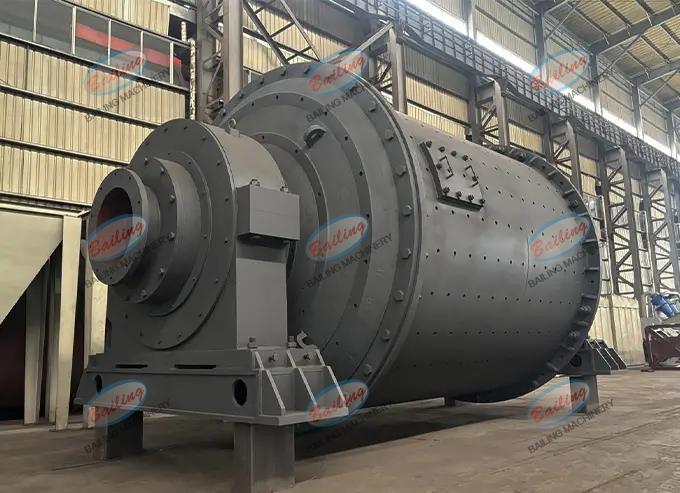
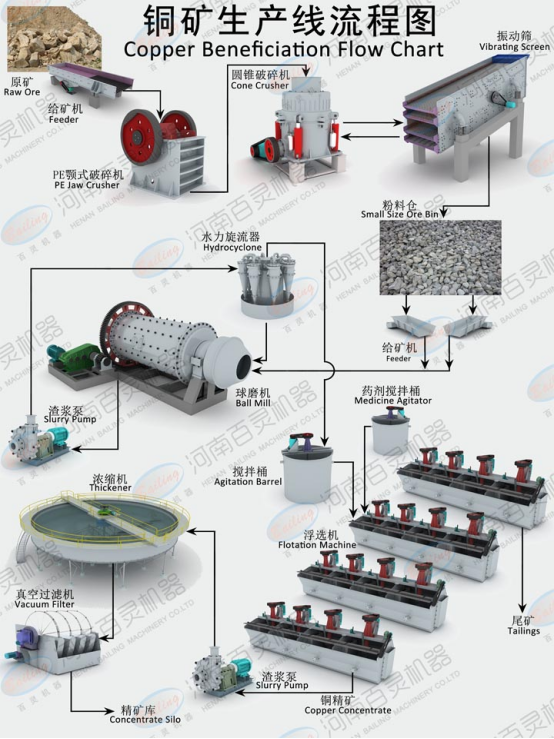
After undergoing multi-stage crushing, the run-of-mine ore enters the grinding stage. Ball mills are utilized to finely grind the ore to an appropriate particle size (typically with 60–85% passing through a -200 mesh screen), ensuring the complete liberation of copper minerals from the gangue. The grinding fineness must be adjusted according to the textural characteristics of the ore; for instance, coarse-grained, uniformly disseminated ores may require only single-stage grinding, whereas ores with complex dissemination patterns typically require two-stage grinding to optimize efficiency.
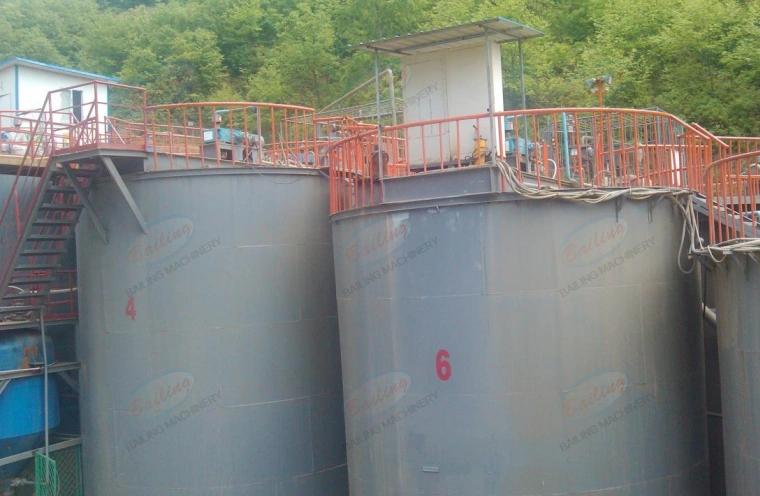
Slurry Conditioning and Reagent Addition: The mineral slurry, having undergone grinding, is mixed with various reagents in a conditioning tank. Key reagents include:
pH Adjusters (e.g., lime): Used to create a strongly alkaline environment (pH 10–12) to depress impurities such as pyrite.
Collectors (e.g., xanthates): Selectively adsorb onto the surfaces of copper minerals, rendering them hydrophobic and enabling them to attach to air bubbles.
Depressants (e.g., cyanides or sodium silicate): Used to control the flotation of gangue minerals. Flotation Stage:
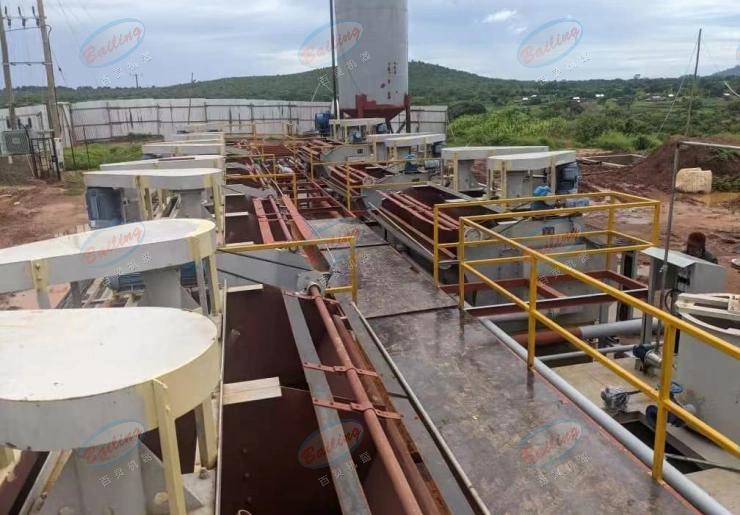
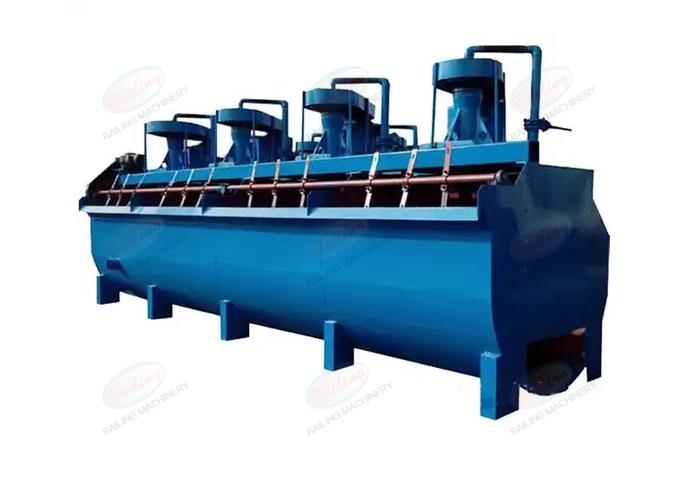
Roughing: Under aerated conditions, copper minerals attach to air bubbles to form a froth; this froth is skimmed off to yield a rough concentrate.
Scavenging: Residual copper minerals remaining in the roughing tailings are recovered; the recovery rate is enhanced by adding supplementary collectors, and the resulting scavenger concentrate is returned to the roughing circuit.
Cleaning: The rough concentrate undergoes multiple cleaning stages (e.g., triple cleaning) to reduce impurities within a low-density pulp environment, ultimately yielding a high-grade copper concentrate.
Process Advantages: This process is predicated on differences in the surface electrical properties and wettability of minerals; it achieves selective separation through the precise regulation of chemical reagents. It is particularly well-suited for processing high-sulfur or complex polymetallic ores. For instance, the differential flotation method allows for the preferential recovery of copper minerals, followed by the processing of sulfur components within the tailings, thereby significantly elevating the grade of the final concentrate.
This technology is widely deployed in mineral processing plants ranging from small-to-medium scale to large-scale operations. By balancing cost-effectiveness with recovery efficiency, it serves as a pivotal technology for the efficient utilization of copper resources.
Copper Sulfide Flotation Process Flowchart
Related Case Study
Henan Bailing Machinery’s Copper Sulfide Flotation Project for a Mine in Gansu: This project adopted a process flow incorporating “ore washing and desliming” alongside “stage grinding and stage flotation.” This approach effectively mitigated the interference caused by fine slimes and achieved the efficient liberation of lean intergrowth particles. Furthermore, the project pioneered the application of a “combined reagent regime” (utilizing the synergistic effects of SIBX and MBT) and strictly regulated pulp pH levels and depressants to enhance selectivity. Concurrently, the process introduced a “rapid flotation—flotation column” intensified circuit and an automated process control system. Following these optimizations—and based on an equivalent raw ore grade—the copper concentrate grade rose from 21.5% to 26.8%, the overall recovery rate improved from 86.5% to 92.1%, and the grade of the final tailings was reduced by 41.7%. This outcome represents a simultaneous breakthrough in economic returns, resource recovery efficiency, and operational stability. This case study validates the efficacy of a systematic strategy—encompassing “pretreatment, synergistic grinding and beneficiation, customized reagent schemes, and intelligent control”—in resolving the complex challenges associated with the flotation of sulfide ores.