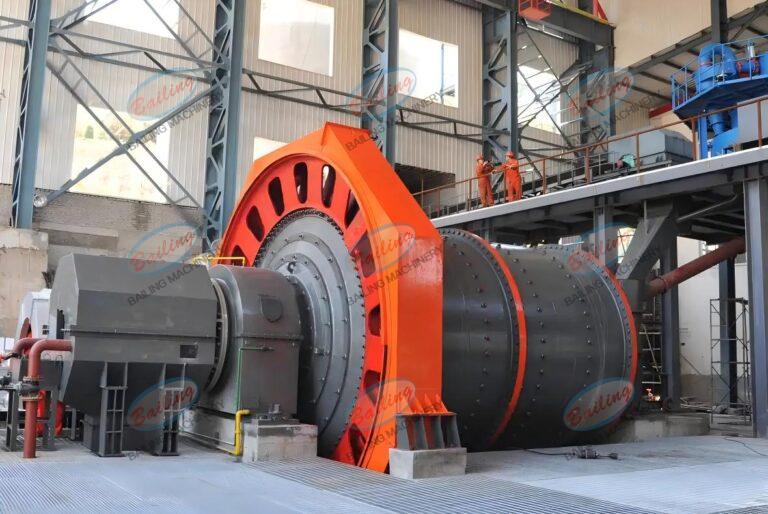
Barite Beneficiation Process Flow
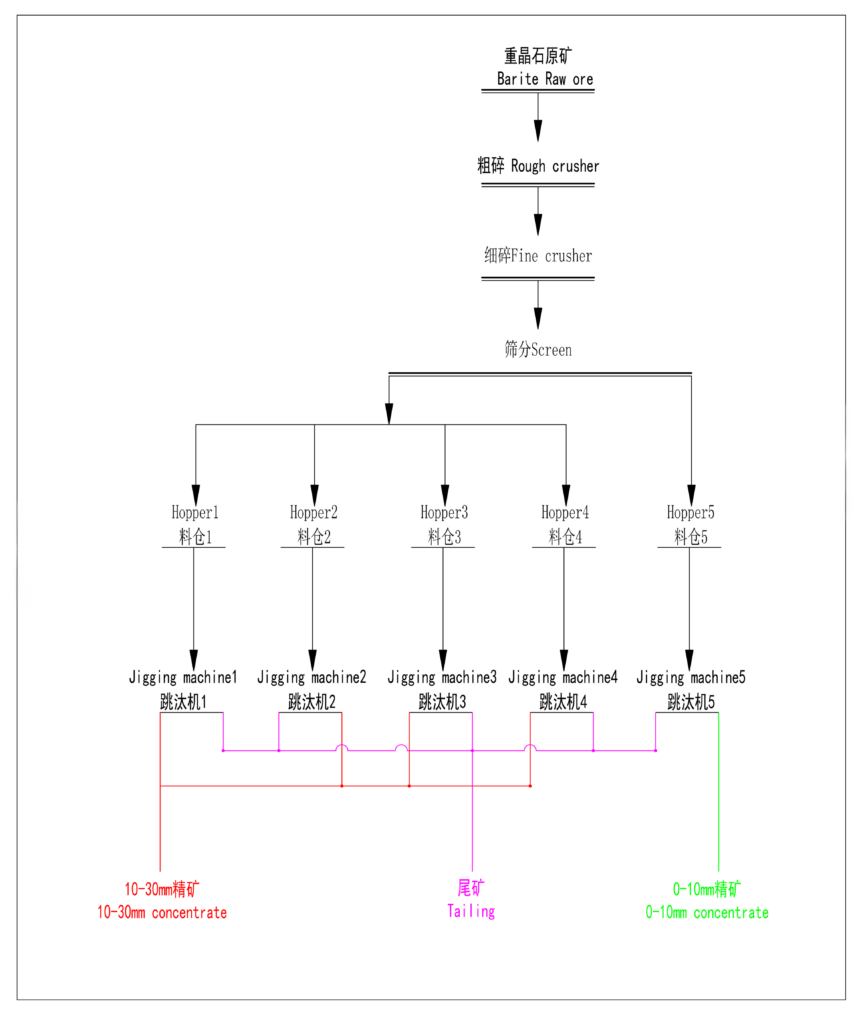
The crushing circuit utilizes Bailing Machinery’s jaw crushers, employing a two-stage crushing process to reduce large lumps of mined barite ore. The screening circuit employs circular vibrating screens; this type of vibrating screen features a low failure rate, high processing capacity, high screening efficiency, and ease of operation, making it the ideal equipment for screening barite ore.
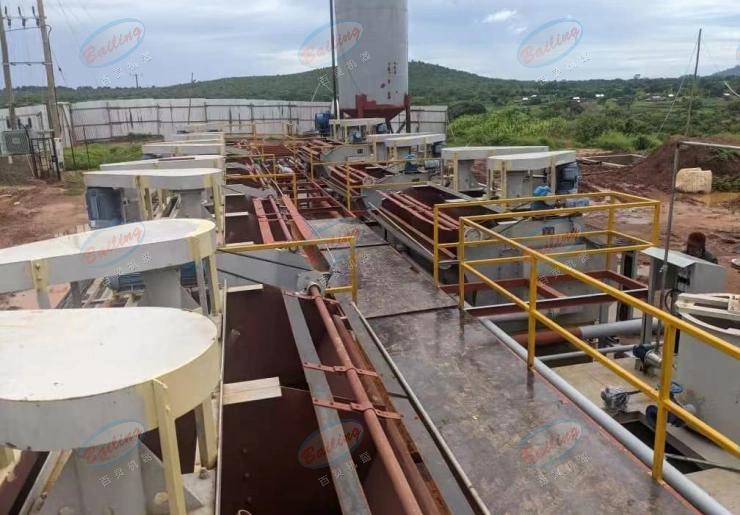
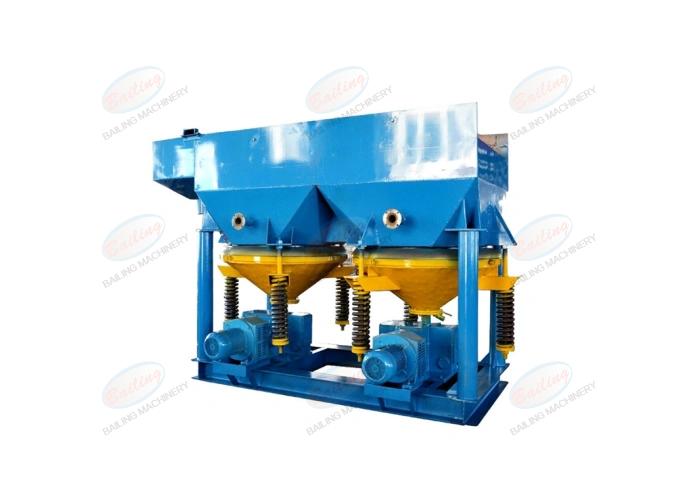
By exploiting the density difference between barite and gangue minerals (such as quartz, calcite, etc.—barite density: 4.5 g/cm³; quartz density: 2.65 g/cm³), density-based stratification and separation are achieved through the action of fluid media or vibration. The jigging machine is the core equipment for gravity separation of barite. Through the pulsating action of water flow, the mineral bed is alternately loosened and compacted; high-density barite particles settle to the bottom to form the concentrate, while lower-density gangue minerals remain in the upper layer and are discharged as tailings.
Wet magnetic separators are typically used to remove iron-bearing minerals—such as siderite—from barite intended as raw material for barium-based pharmaceuticals that require very low iron content.
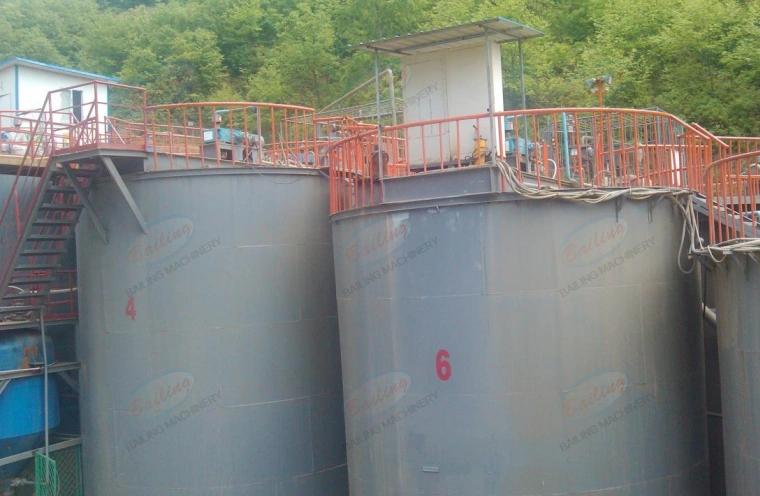
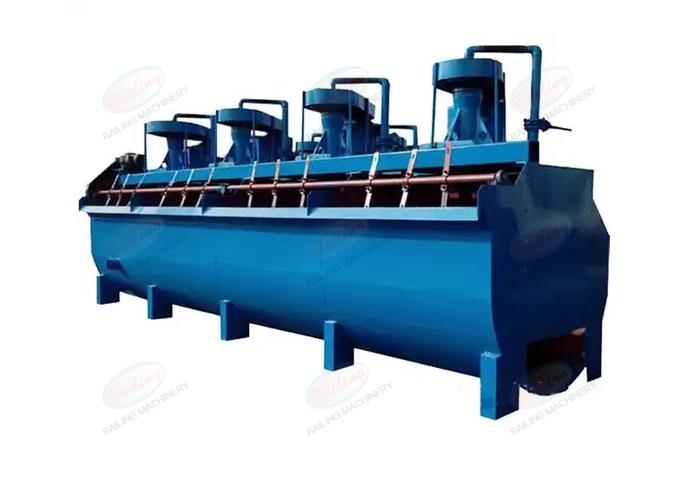
For complex and difficult-to-process barite ores characterized by fine dissemination sizes, low grades, or intimate association with gangue minerals such as calcite, fluorite, and quartz, flotation is the only effective beneficiation method.
Flotation Process
Direct Flotation: Directly floating the barite. Common collectors used include fatty acids (e.g., oleic acid, oxidized paraffin soap), while modifiers—such as water glass—are used to depress silicate gangue minerals. Reverse Flotation: Suppressing barite while floating out gangue minerals. For instance, when the gangue consists primarily of calcite, reagents such as starch can be used to suppress the barite, while fatty acids are employed to float the calcite.
Selective Flotation vs. Bulk Flotation: For ores containing multiple associated valuable minerals (such as fluorite and sulfides), a complex reagent regime must be designed to selectively float—either sequentially or simultaneously—the various minerals, thereby achieving comprehensive recovery.
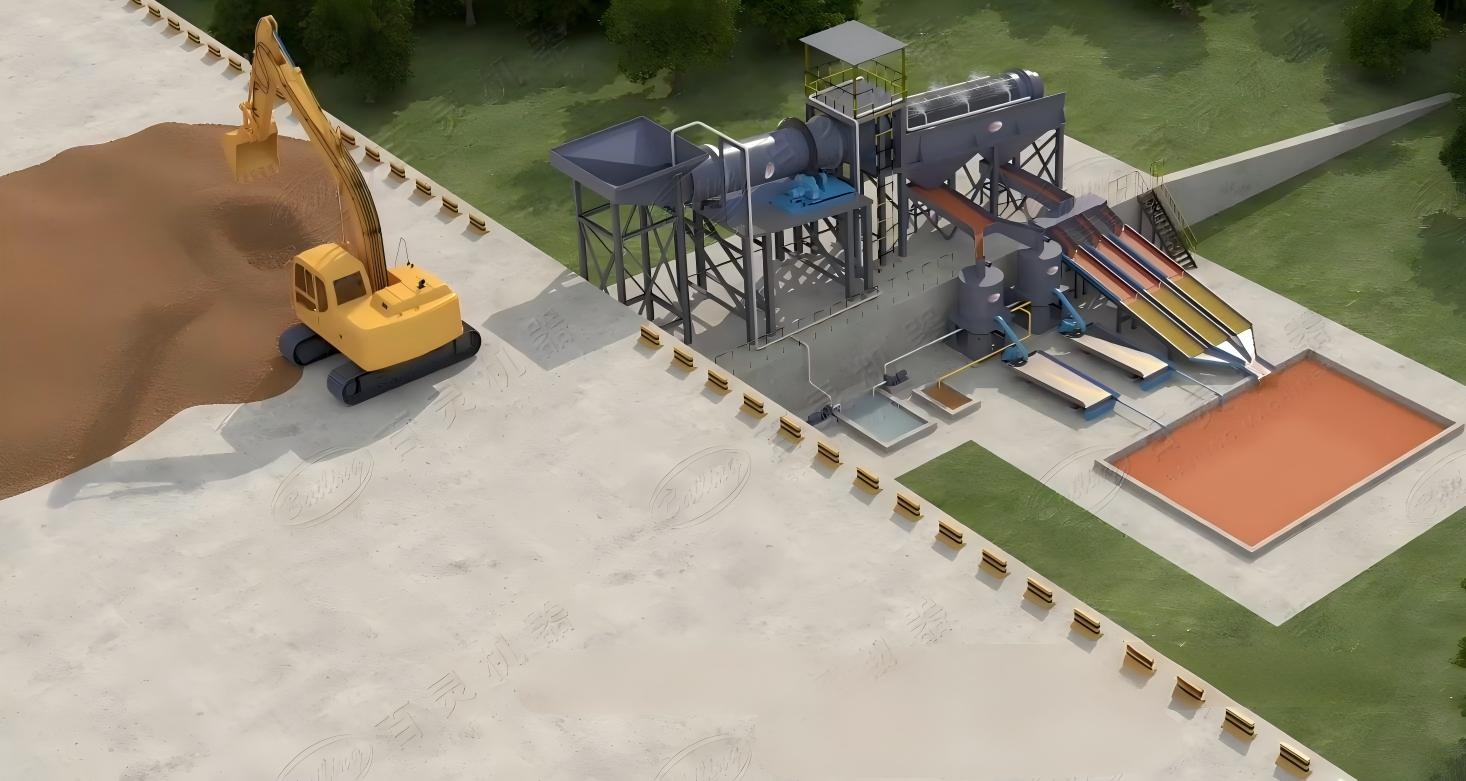
Barite Beneficiation Process Flowchart
Related Case Study
In a practical flotation application at a barite mine in Guizhou, Henan Bailing Machinery addressed the challenge posed by the intimate association of barite with gangue minerals—such as fluorite and calcite—within the ore. They implemented a flotation process utilizing the following reagent scheme: “pH adjustment to 8–9 using sodium carbonate + silicate suppression using water glass + oleic acid-based collectors.” Through fine grinding to a fineness of 85% passing -200 mesh to ensure adequate mineral liberation, and following a circuit comprising one roughing stage, three cleaning stages, and two scavenging stages, the operation successfully produced a high-quality barite concentrate with a BaSO₄ content of ≥92% and a recovery rate of 89%. This approach effectively resolved the difficulties typically encountered in separating fluorite from barite using traditional beneficiation methods.