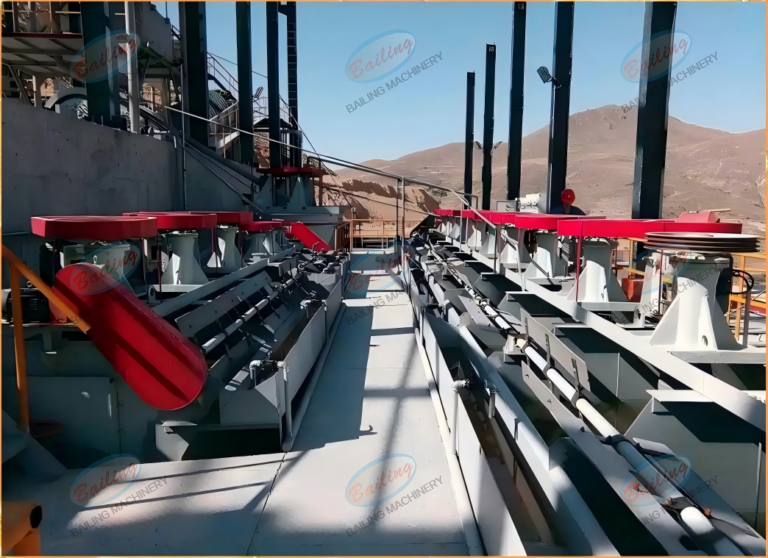
Potash Feldspar Beneficiation Flowchart
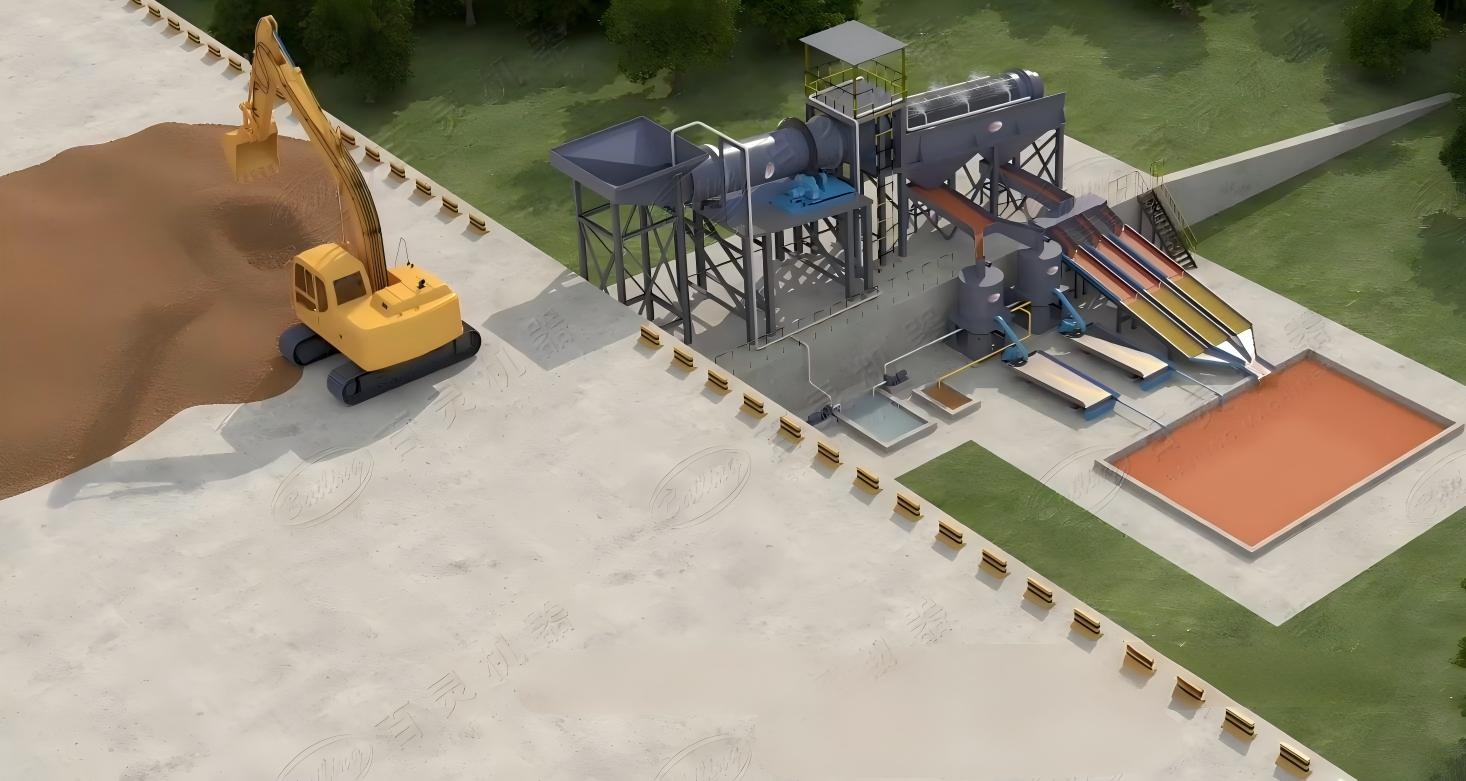
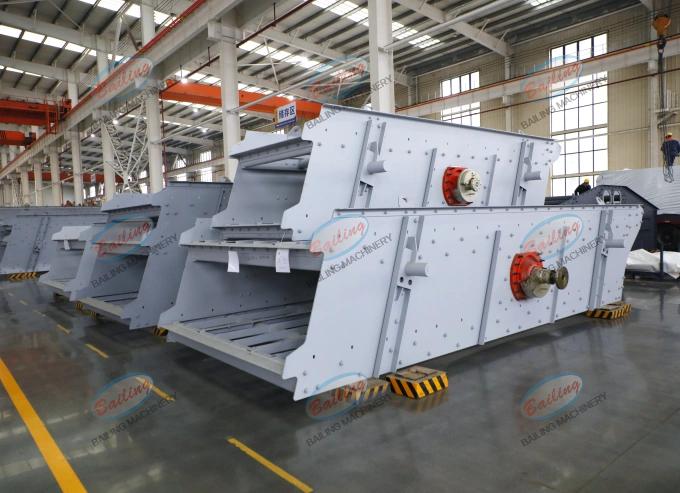
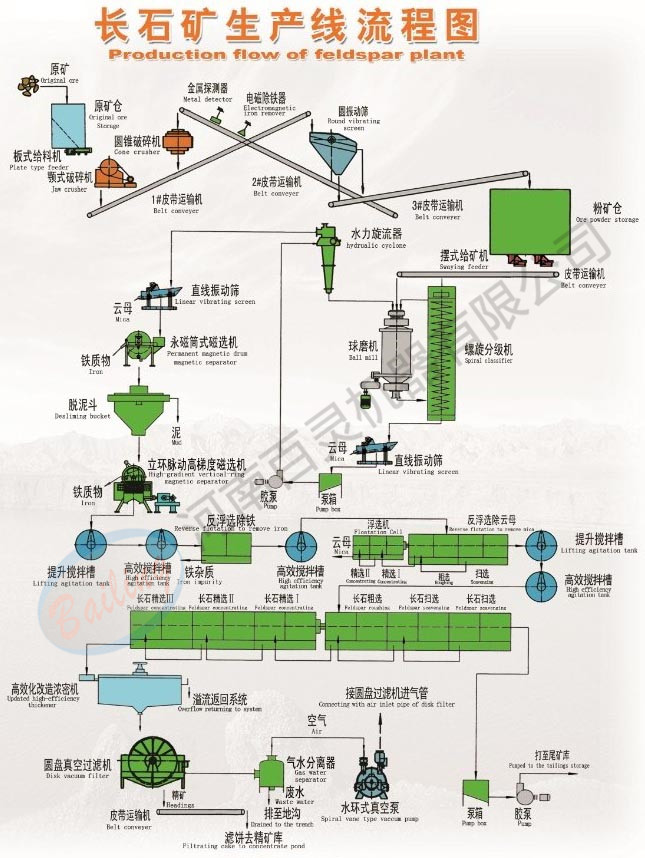
Based on the varying particle sizes of the raw ore, Henan Bailing Machinery has developed processing schemes ranging from simple single-stage crushing to three-stage crushing systems. These systems perform coarse crushing on lump ores, followed by screening.
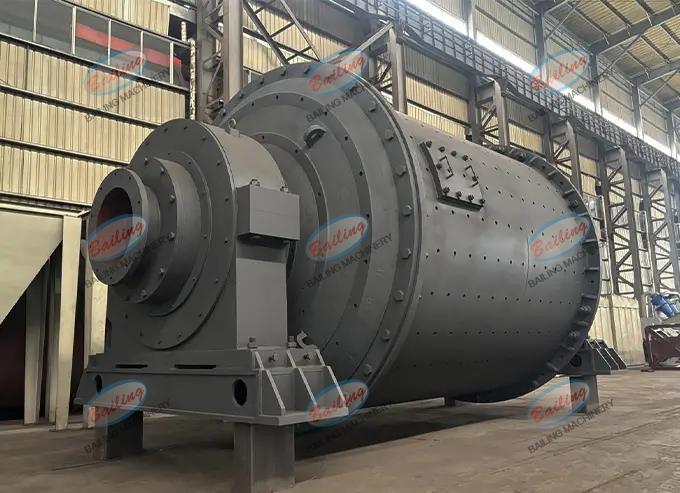
Qualified material—having passed through the crushing stage—is fed into a wet grate-type ball mill for grinding. The discharge from the ball mill enters classification equipment for sizing. The underflow (sands) from the classifier is returned to the ball mill for regrinding, while the overflow constitutes the qualified material ready for the next stage of beneficiation.
The finely ground material is fed into a desliming hopper or hydrocyclone to remove fine slimes.
The material, now free of slimes following the desliming stage, undergoes magnetic separation using both strong and weak magnetic separators to extract magnetite and other weakly magnetic minerals. Magnetic separation is crucial for feldspar processing, as it represents the most selective and efficient method for removing iron-bearing minerals.
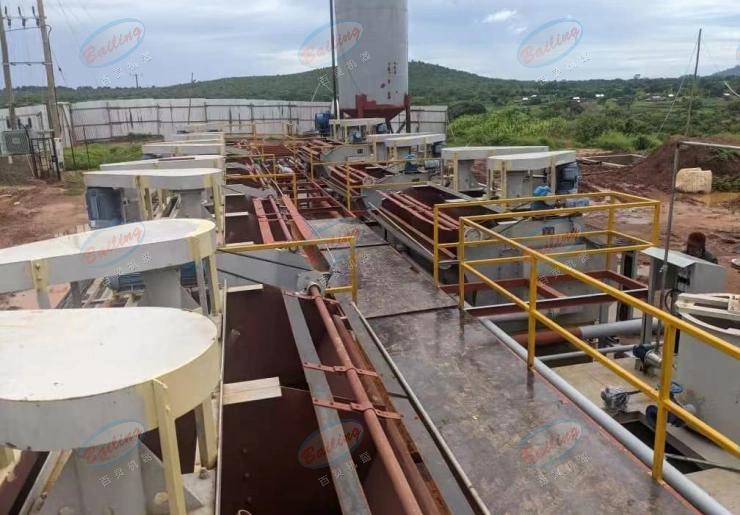
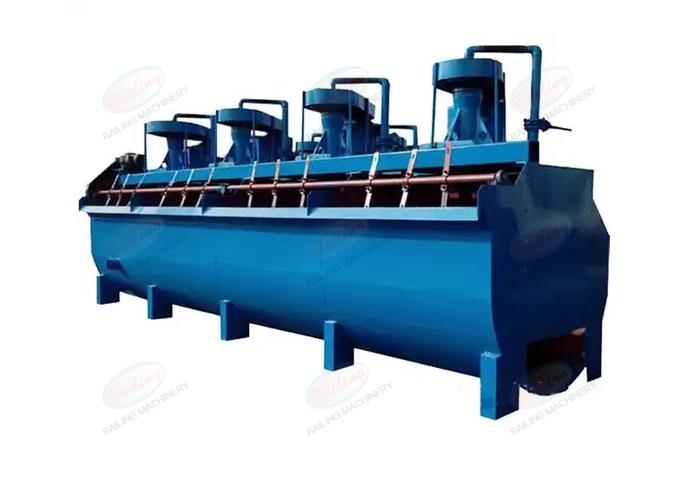
To eliminate residual impurities—such as iron compounds, calcium compounds, and mica—that may still be present in the magnetic concentrate, and to separate excess quartz from the ore to further improve the concentrate grade, the magnetic concentrate undergoes a flotation process for impurity removal and purification. For the removal of impurity minerals, Henan Bailing Machinery typically employs highly selective collectors to produce high-grade feldspar fines.
Potassium Feldspar Beneficiation Process Flowchart
Related Case Study
A potassium feldspar mine in Hebei Province possessed raw ore containing approximately 65% potassium feldspar, accompanied by quartz, mica, and minor amounts of iron-bearing minerals. The client commissioned Henan Bailing Machinery to design a beneficiation scheme for this deposit. Our company implemented a combined “crushing–grinding–magnetic separation–flotation” process: the ore was first coarsely crushed to 20 mm using a jaw crusher, then finely ground in a ball mill to a fineness of 80% passing -200 mesh. A high-gradient magnetic separator was utilized to remove mica and iron impurities; finally, following activation with hydrofluoric acid, flotation using amine-based collectors was employed to separate the quartz. The process ultimately yielded a high-quality potassium feldspar concentrate with a potassium content of ≥12% and an iron content of ≤0.3%, achieving a recovery rate exceeding 85% and fully meeting the client’s beneficiation requirements.