Process Overview
Placer gold processing is a beneficiation technique designed for the recovery of free gold found in riverbeds, alluvial deposits, or weathered strata. It primarily leverages the density difference between gold and gangue minerals to achieve gold enrichment through gravity separation methods. This process features a simple workflow, excellent environmental compatibility-as it requires no chemical reagents-and low investment and operating costs; consequently, it is the most widely utilized method in the development of placer and alluvial gold deposits.
Application Fields
Riverine alluvial placer gold deposits; residual-eluvial and proluvial placer gold deposits; ores where gold exists in a free state with relatively coarse grain sizes; and gold resources for which grinding and chemical extraction methods are either unsuitable or unnecessary.
Placer Gold Processing Flowchart
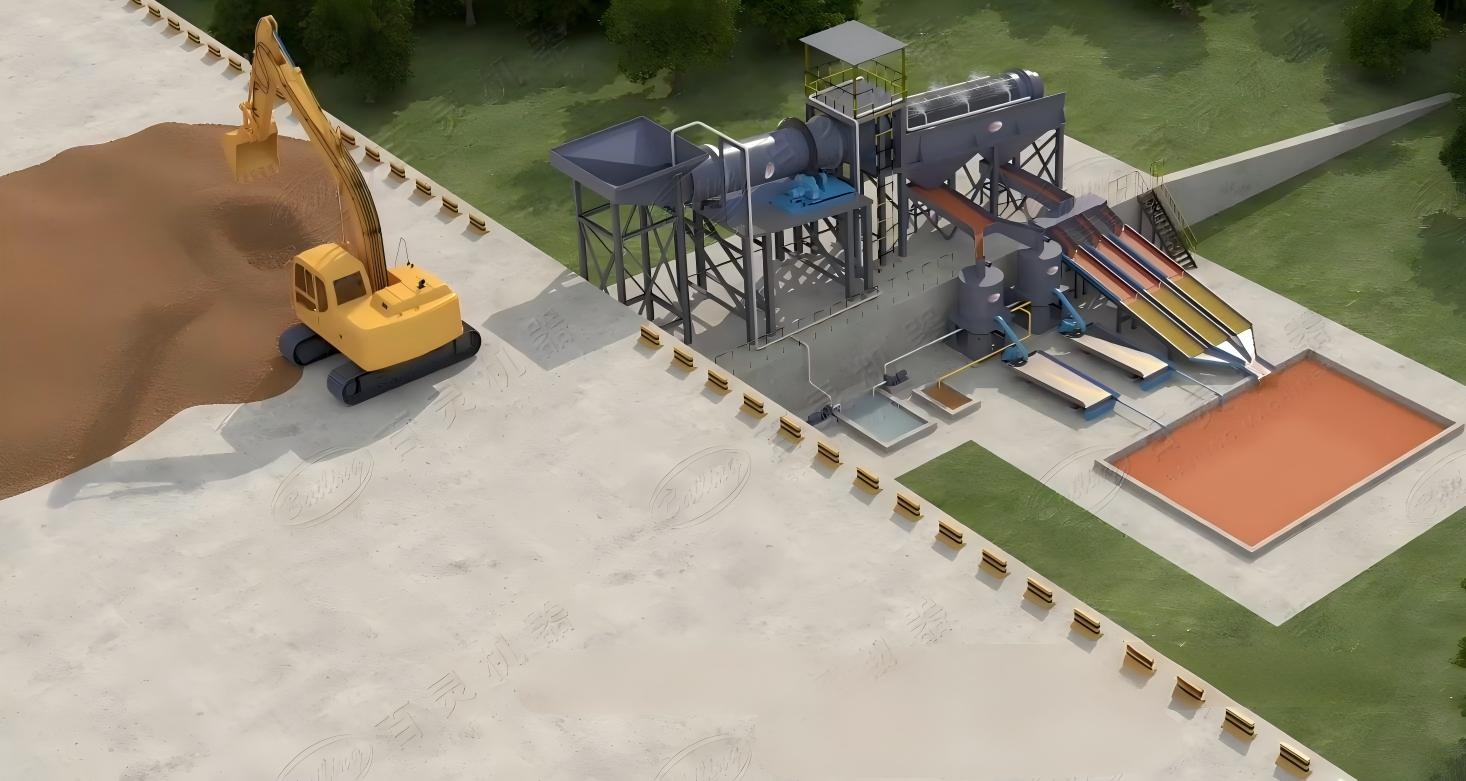
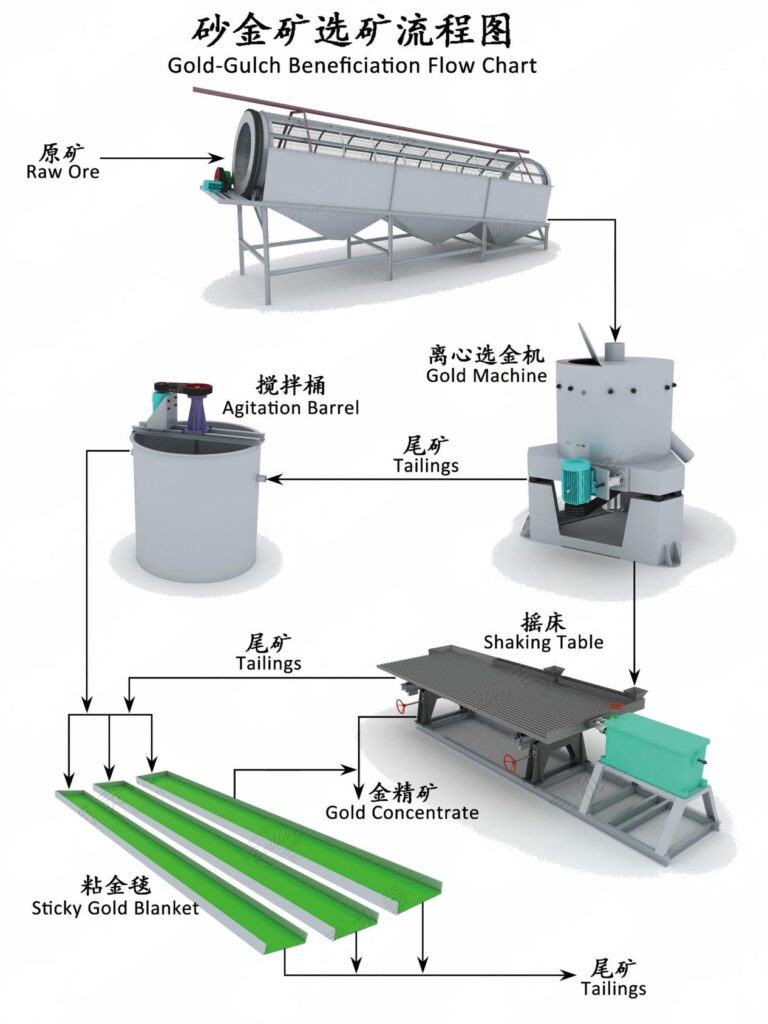
The placer gold beneficiation process typically comprises stages such as feeding, washing and screening, gravity separation, and concentrate treatment. Raw placer ore is fed via feeding equipment into a washing and screening system to remove clay and large waste rocks; material of the appropriate grain size then enters gravity separation equipment, where free gold is recovered through gravimetric action. The resulting placer gold concentrate undergoes further refining and washing to yield a final gold concentrate suitable for direct smelting, while the tailings are discharged into a tailings management system.
The specific steps are as follows:
Washing: High-pressure water jets are used to flush the raw ore, washing away the clay and impurities adhering to the surface of the gold particles.
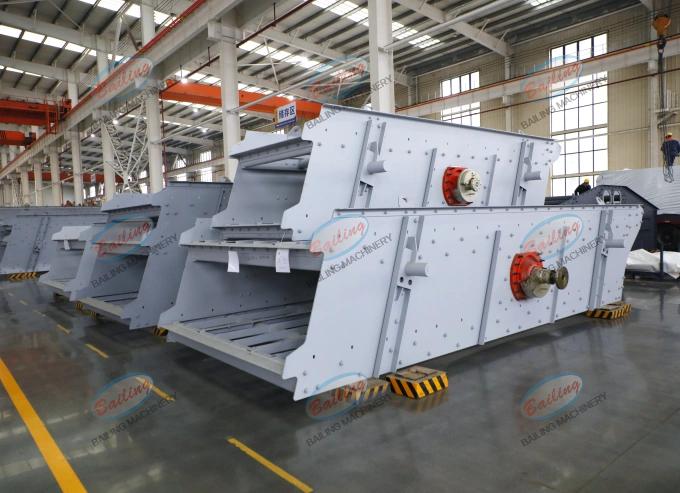
Screening: The washed ore is classified using trommel screens or vibrating screens. Large waste rocks (>5–10 mm)—which contain no gold—are discarded directly, leaving only the gold-bearing fine sands to proceed to the next stage.
Desliming (as required): If the ore contains excessive fine clay, specialized equipment is employed to remove it, as fine clay can “encapsulate” gold particles, leading to gold losses.
Roughing: Processing of high-volume, coarse-grained placer sands.
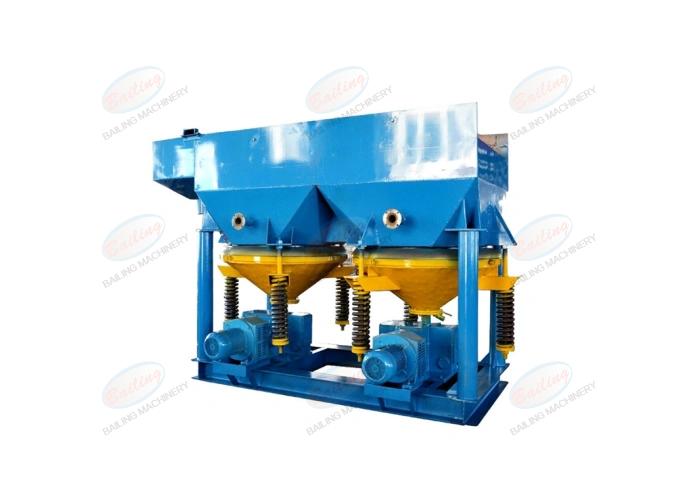
Jigging: Suitable for recovering coarse gold particles (>0.3 mm); utilizes pulsating water flows to cause the gold particles to settle at the bottom.
Sluicing: The ore slurry flows over an inclined sluice channel, allowing gold particles to become trapped within the riffles or mats lining the bottom. Fine Concentration: Processing the coarse concentrates obtained from gravity separation, or recovering ultra-fine gold particles.
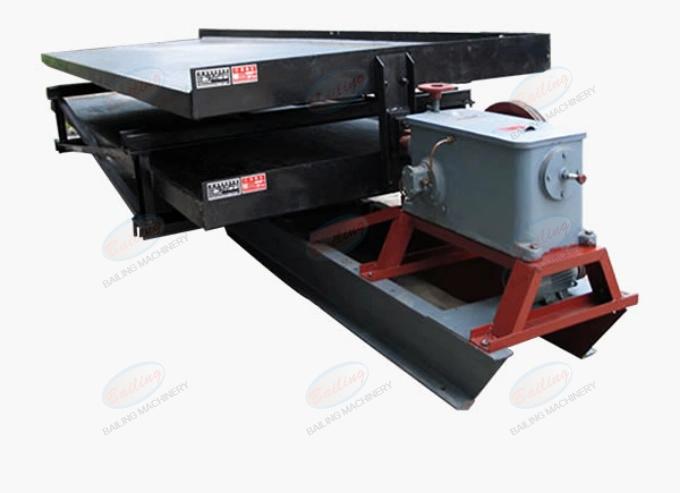
Shaking Table: Utilizes a reciprocating motion to stratify and separate gold from heavy minerals, offering high precision.
Centrifuge: Harnesses powerful centrifugal force specifically to capture ultra-fine gold particles (<0.1 mm), thereby preventing gold loss.
Following gravity separation, the result is a mixture containing gold and other heavy minerals (such as iron ore), which requires further purification.
Impurity Removal: Typically, a magnetic separator is used to extract magnetic minerals (such as magnetite), thereby increasing the purity of the gold concentrate.
Smelting and Refining:
The purified gold concentrate is placed into a smelting furnace (with borax added as a flux).
During high-temperature smelting, impurities transform into slag that floats to the surface, while the molten gold settles at the bottom.
The molten gold is then poured out and allowed to cool, yielding gold ingots.
Alluvial Gold Processing Flowchart
Related Case Study
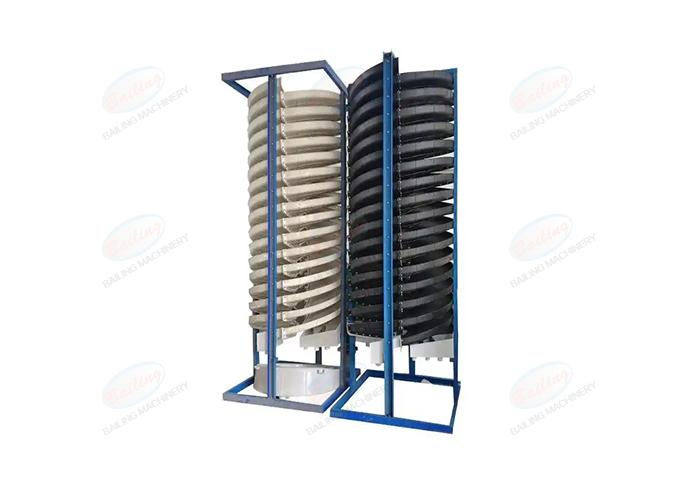
An alluvial gold mine located in a riverbed in Peru employs a gravity separation process. After the raw ore sand undergoes washing and classification via a trommel screen, coarse gold particles are recovered using fixed sluice boxes, while the finer fractions are fed into jigs and spiral chutes for rough concentration. The resulting heavy mineral concentrate is then subjected to fine concentration on shaking tables, ultimately yielding a gold concentrate with an overall recovery rate of 85%. This process features a simple workflow and low operating costs, effectively achieving the enrichment and recovery of alluvial gold.