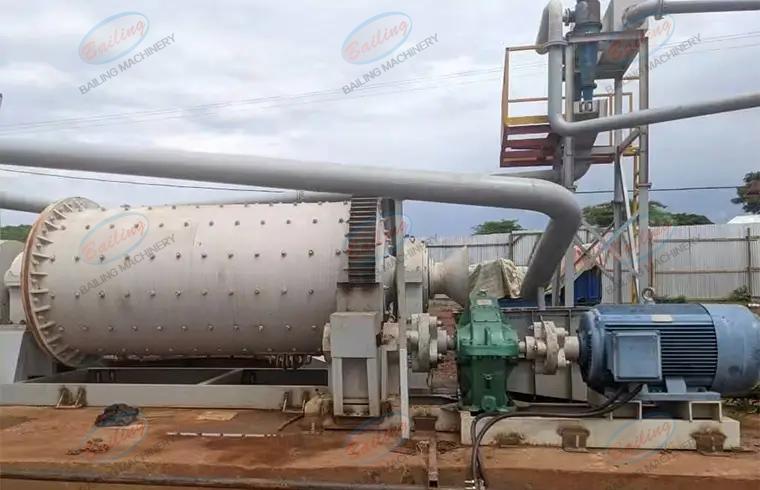
Magnetite Beneficiation Flowsheet
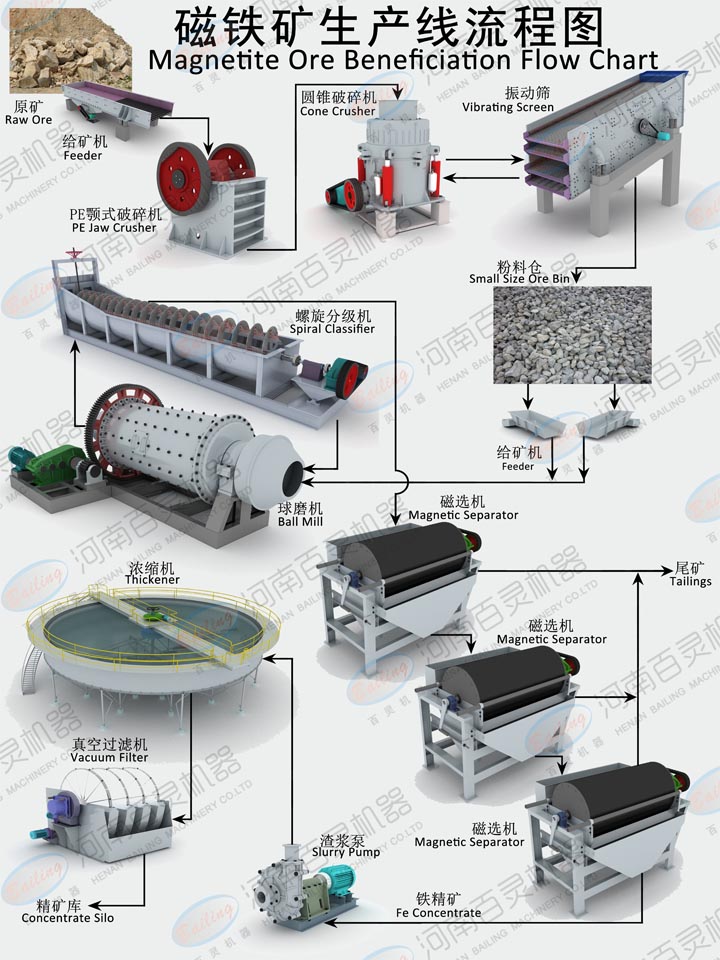
The magnetite beneficiation flowsheet typically comprises several key stages: crushing, grinding, classification, and magnetic separation. After the raw ore undergoes crushing and grinding, the magnetite and gangue minerals achieve complete liberation (monomineralic dissociation). The resulting qualified pulp is then fed into the magnetic separation system, which typically employs a multi-stage process—including roughing, cleaning, and scavenging—to recover the magnetite. The recovered magnetite concentrate is subsequently thickened and dewatered to serve as the final product, while the magnetic separation tailings are directed to the tailings treatment system.
Key Process Steps
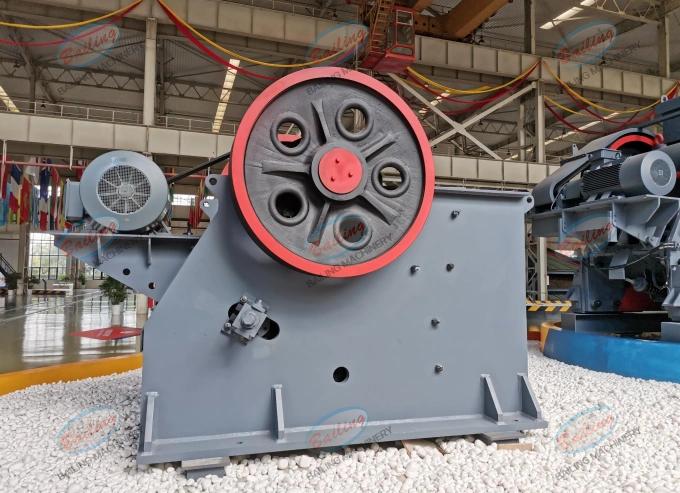
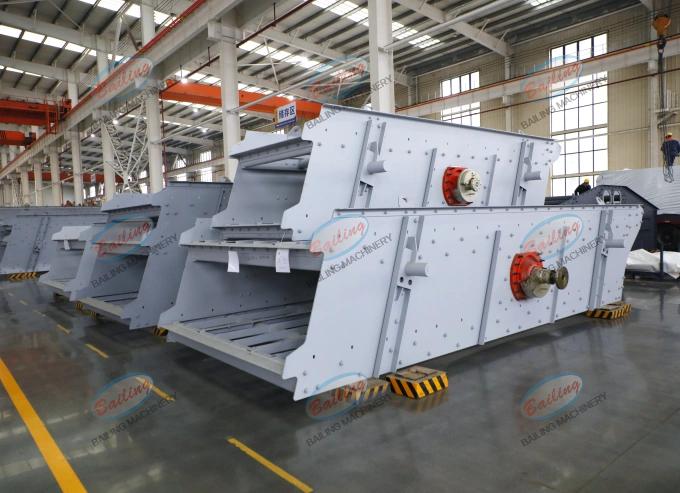
Given the high hardness of this iron ore, a large-scale jaw crusher is utilized for primary crushing. A vibrating feeder is installed upstream of the crusher to ensure a uniform feed rate into the jaw crusher while simultaneously screening the raw ore into two size fractions: +75mm and -75mm. The +75mm fraction enters the jaw crusher for primary reduction, while the -75mm fraction is directed to a cone crusher for further crushing.
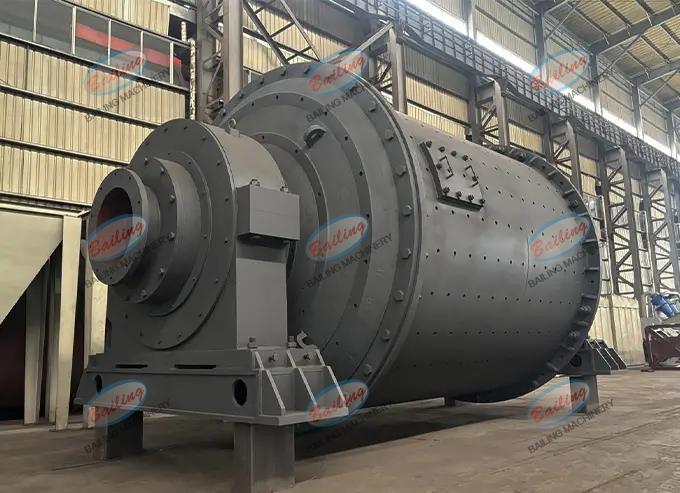
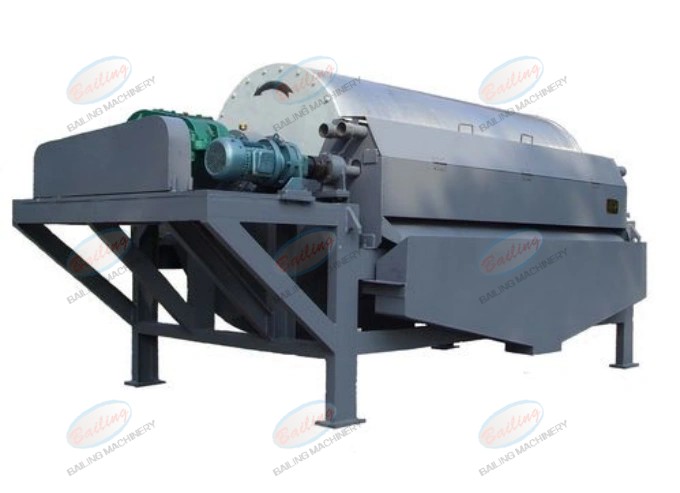
Due to the ore’s high hardness and extremely fine dissemination size, a standard single-stage grinding circuit would struggle to achieve the required throughput and degree of mineral liberation. Consequently, this process typically employs a two-stage grinding circuit. This approach effectively mitigates issues such as ore sliming (over-grinding) and reduced mill efficiency, while simultaneously boosting throughput and achieving the required grinding fineness. Beneficiation Process: The beneficiation process employs three permanent-magnet drum-type magnetic separators. The first stage of separation utilizes a single magnetic separator, while the second stage employs one roughing magnetic separator and one cleaning magnetic separator, aiming to achieve a concentrate grade exceeding 63%. This beneficiation flowsheet incorporates a demagnetization step to remove residual magnetism retained by the minerals after magnetic separation, thereby preventing the formation of magnetic chains that could hinder the improvement of the concentrate grade.
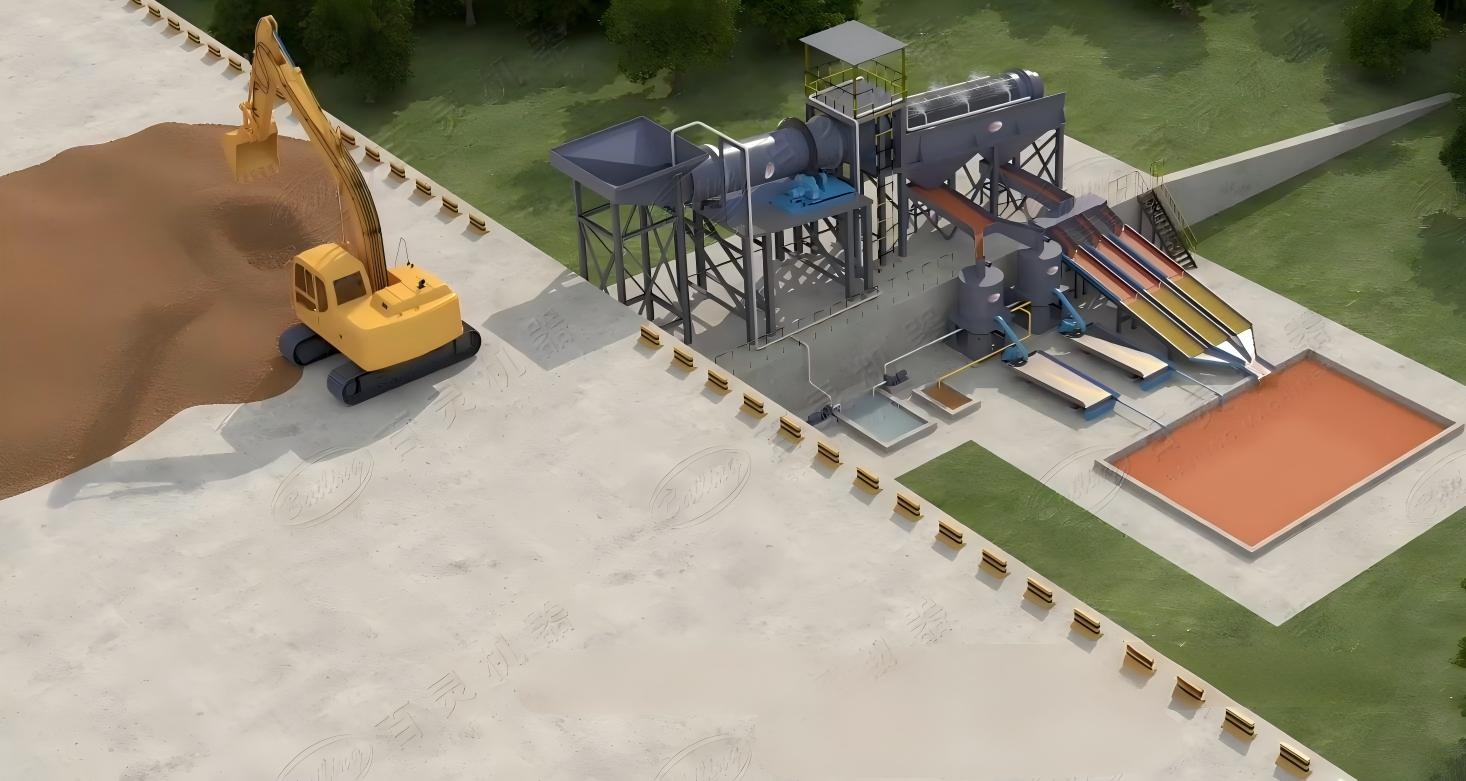
Magnetite Beneficiation Process Flow Diagram
Related Case Study
For a specific Anshan-type magnetite deposit in Liaoning Province—characterized by a raw ore grade (TFe) of approximately 28.50% and fine mineral dissemination—Henan Bailing Machinery designed and implemented a mature “stage grinding-magnetic separation” process flowsheet. Through a closed-circuit primary grinding stage integrated with a classifier, a portion of the tailings is initially discarded at a relatively coarse particle size. Subsequently, a secondary grinding stage is performed to ensure full mineral liberation, followed by a cleaning stage utilizing high-performance permanent-magnet drum separators. This approach effectively mitigates the impact of fluctuations in raw ore properties, ultimately achieving a stable iron concentrate grade exceeding 67.00% and a metal recovery rate as high as 82.00%, thereby significantly enhancing both resource utilization efficiency and the enterprise’s economic benefits.