Detailed Overview
1. Ore Preparation and Crushing
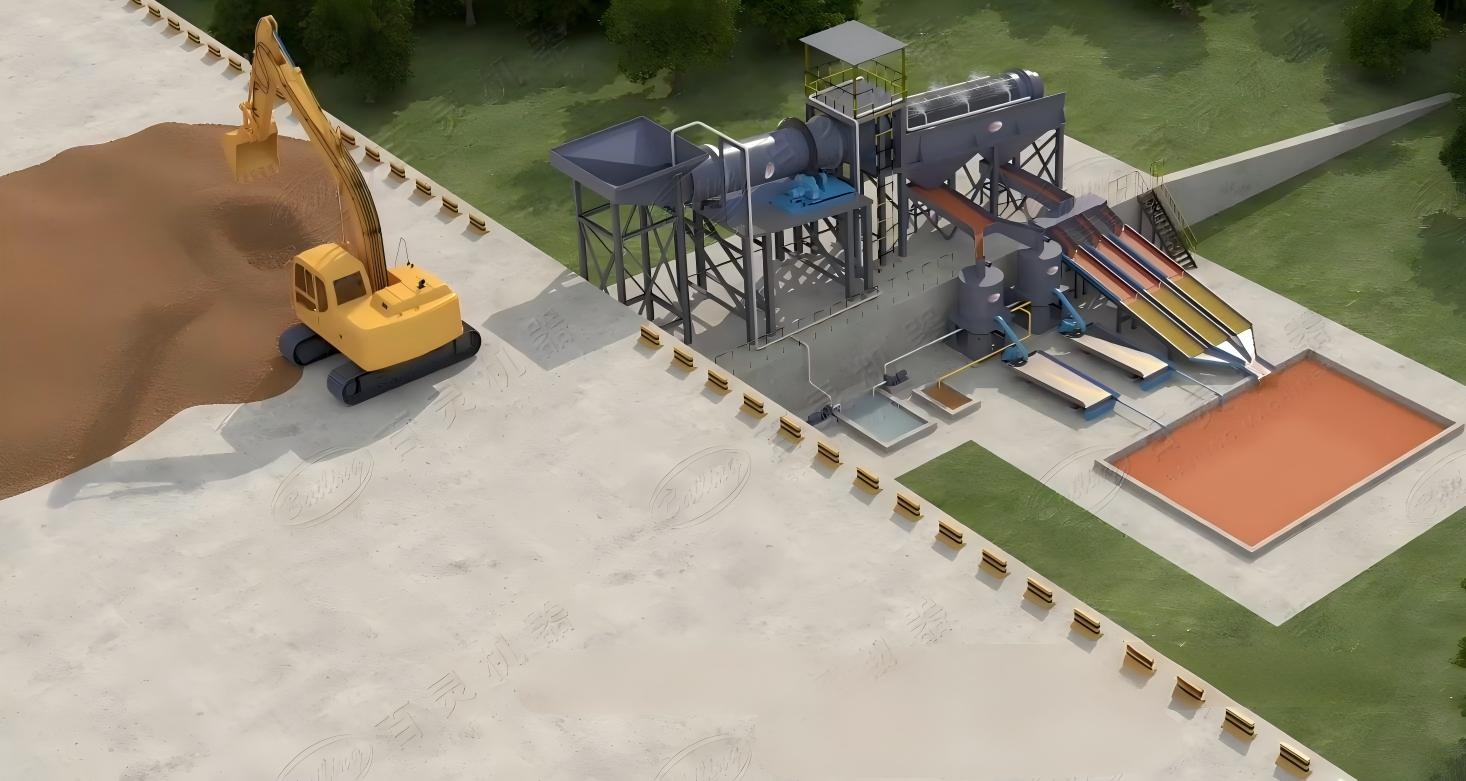
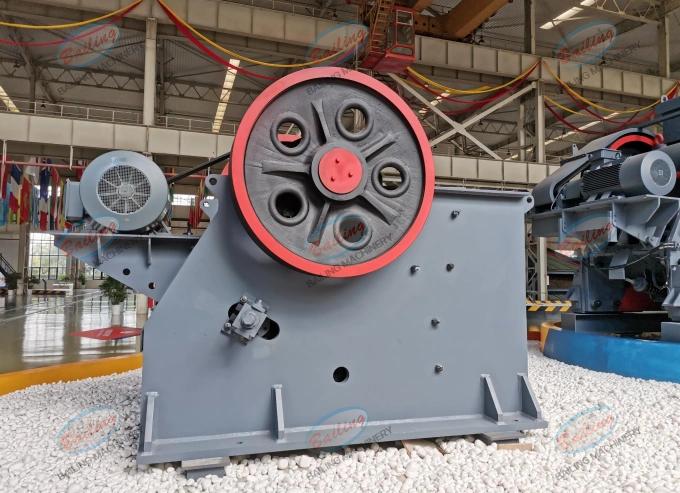
- Crushing Size: The run-of-mine ore must be crushed to a particle size of 5–50 mm—typically controlled within the 10–30 mm range—to ensure an optimal balance between permeability and reaction efficiency.
- Agglomeration (Optional): For ores with a high clay content (>8%), cement (0.5%–1.5%) or lime is added to agglomerate the particles; this enhances the permeability of the heap structure and prevents channeling (preferential flow paths) and compaction/caking.
- Pre-treatment and Impurity Removal: Large waste rock fragments, soil, and other impurities are screened out to reduce the volume of material requiring processing.
2. Heap Pad Construction and Stacking
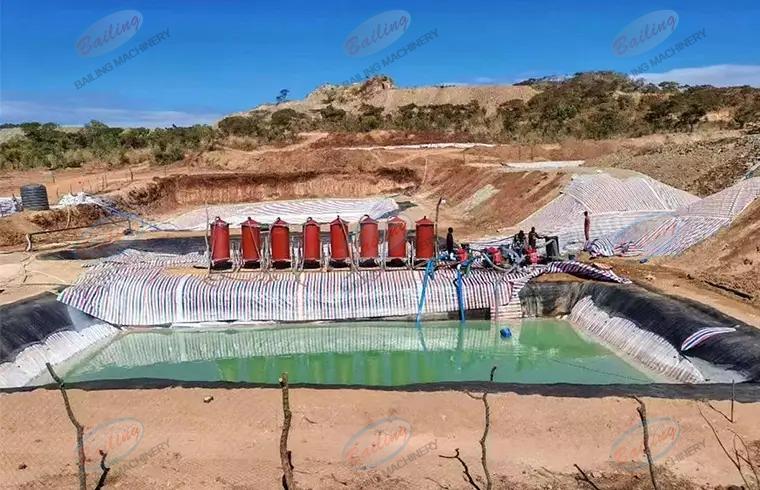
- Impermeable Liner Installation: The base of the heap leaching pad is lined with a High-Density Polyethylene (HDPE) geomembrane (with a minimum thickness of 1.5 mm). A network of drainage ditches and pregnant solution collection pipes is installed beneath the liner to prevent cyanide-bearing solutions from leaking and contaminating the environment.
- Layered Stacking: The ore is stacked in layers, with each layer typically standing 3–5 meters high; the total height of the heap can reach 10–30 meters. A multi-layer compaction technique is employed during stacking to ensure slope stability and uniform permeability throughout the heap.
- Heap Parameters: To prevent localized blockages that could compromise leaching efficiency, the heap must maintain a porosity of >35% and a permeability rate of >0.5 m³/h/m².
3. Cyanide Heap Leaching and Spraying
- Lixiviant Preparation: A sodium cyanide solution with a concentration of 0.03%–0.15% is used. The pH is adjusted to 10–11 (using lime) to suppress the volatilization of HCN and ensure safety.
- Solution Application Method: Spraying (at a rate of 5–12 L/h/m²) or a buried-pipe drip irrigation system is employed to ensure uniform coverage of the ore heap surface by the solution.
- Leaching Cycle: The process continues for 30–90 days, achieving a gold recovery rate of 60%–85%, depending specifically on the degree of ore liberation and the mode of gold occurrence.
4. Pregnant Solution Collection and Gold Recovery
Pregnant Solution Enrichment: The gold-bearing solution (with an Au(CN)₂⁻ concentration of 0.5–5 ppm) is collected via a heap-bottom drainage system and channeled into a pregnant solution pond.
Gold Recovery Methods
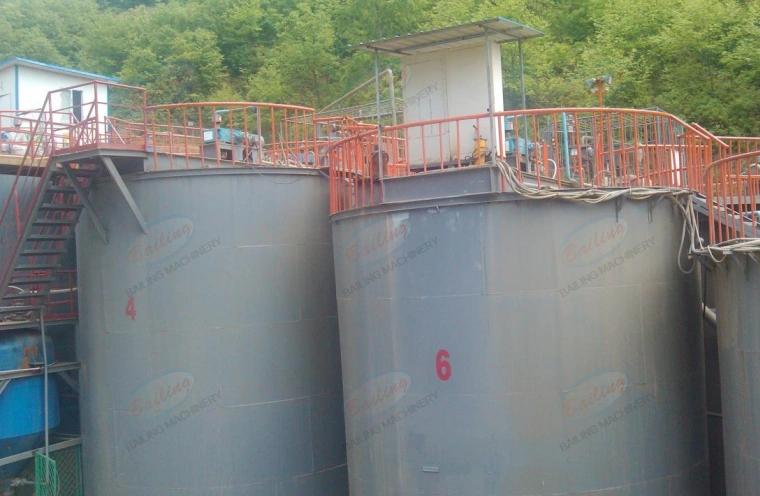
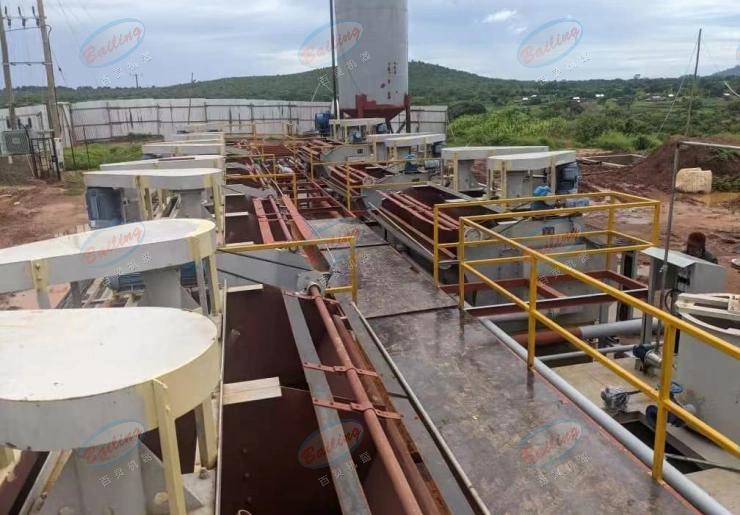
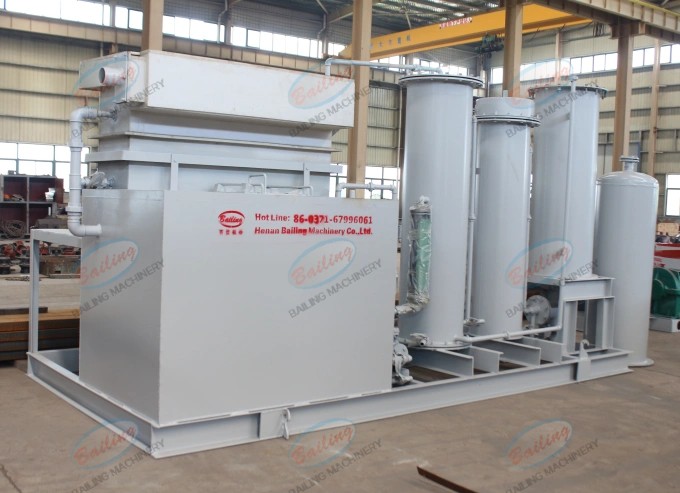
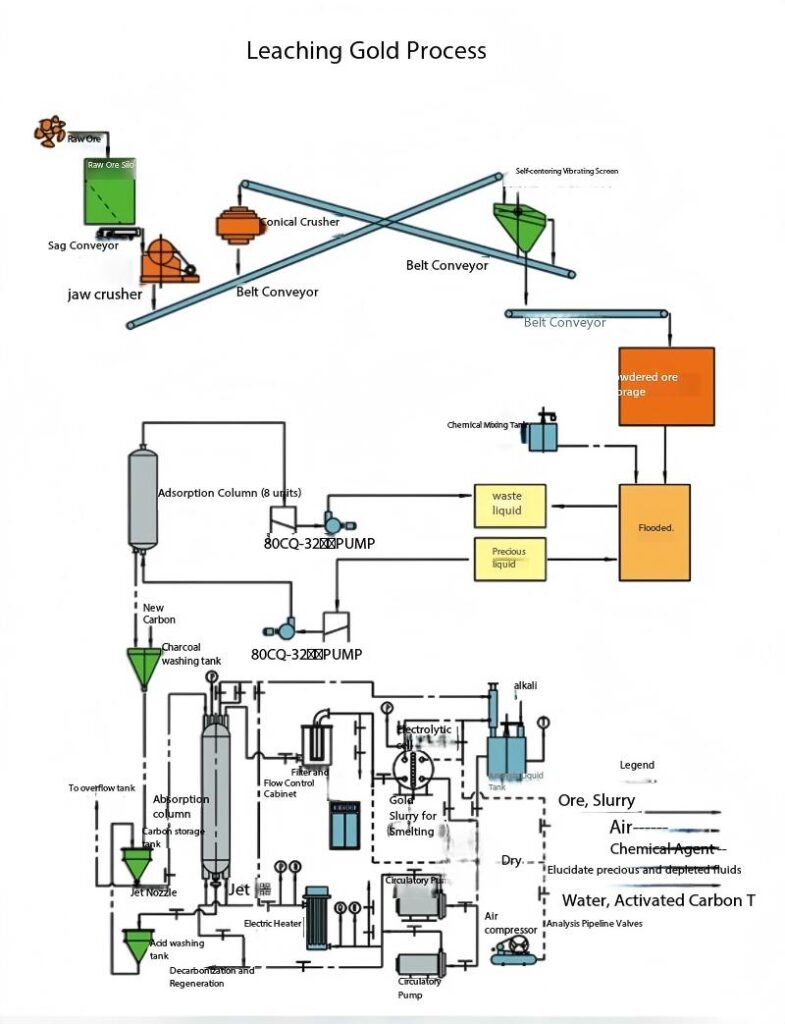
Activated Carbon Adsorption: The mainstream method; gold-loaded carbon undergoes desorption and electrolysis to yield gold slime.
Zinc Dust Displacement: A traditional process involving the precipitation of gold from the solution through displacement by zinc dust.
Barren Solution Recycling: The incompletely reacted lixiviant is replenished with reagents and recycled for reuse, thereby reducing reagent consumption and effluent discharge.
5. Tailings and Environmental Treatment
Waste Ore Heap Treatment: Once the gold content in the leaching residue (spent ore) has been verified to meet regulatory standards, the heap undergoes detoxification, soil capping and revegetation, or dismantling for reuse.
Environmental Risk Control: The effluent (tailings solution) must undergo oxidative degradation—typically using bleaching powder or hydrogen peroxide—to ensure that the cyanide concentration in the discharged liquid remains below 0.5 mg/L.
Applicable Conditions and Technical Advantages
Applicable Ore Types
Oxidized ores with a grade between 0.5 and 3 g/t are most suitable.
Such as gold-bearing quartz veins and structurally altered rocks, where the degree of gold particle exposure is high.
Materials possessing recovery value, such as sub-economic ores, tailings, and waste rock.
Core Advantages
Case Study
A low-grade gold mine in Tajikistan (averaging approximately 1.0 g/t) adopted the heap leaching process. After crushing the run-of-mine ore to a particle size of -20 mm, it was stacked into a heap. A dilute sodium cyanide solution (oxygenated) was continuously sprayed over the heap for leaching over a period of approximately 50 days, achieving a gold recovery rate of 70%. The gold-bearing pregnant solution was subsequently processed via activated carbon adsorption to recover the gold, ultimately yielding gold ingots. This process—characterized by low investment and low operating costs—successfully enabled the economic utilization of low-grade mineral resources.